
Moringa oleifera- native to Africa & Asia- is nicknamed the “Tree of Life” because of its many uses. It’s also called the “drumstick or horseradish tree.” The hardy, drought-tolerant moringa tree grows rapidly in tropical & subtropical regions. All parts of the tree are said to be usable.
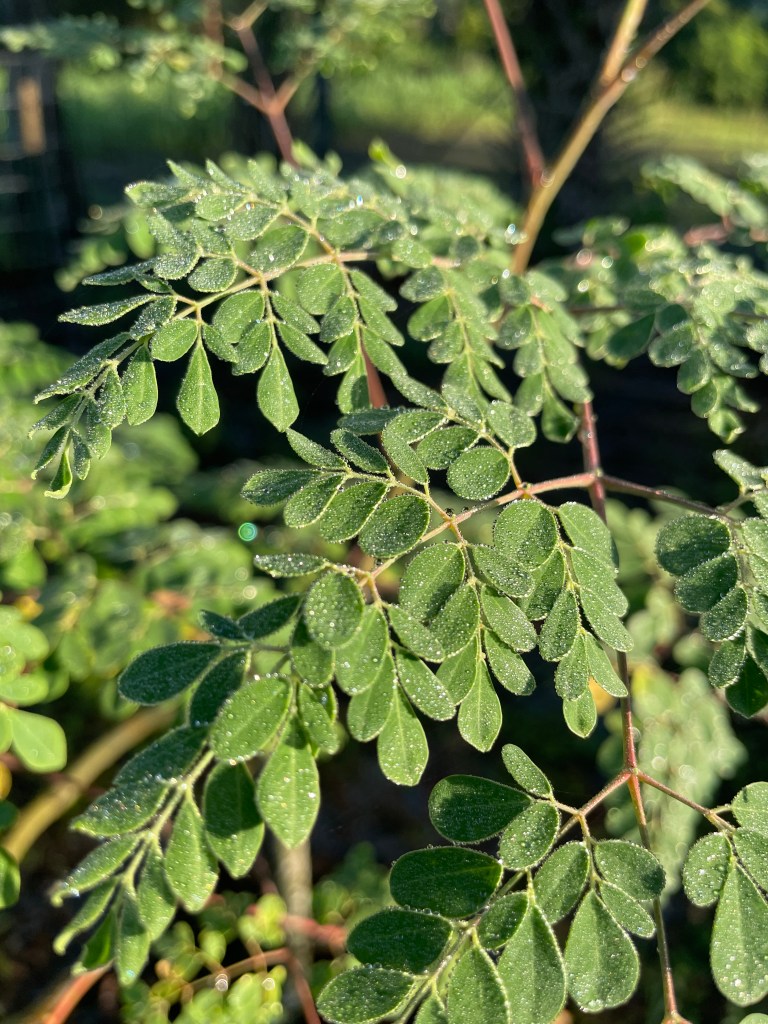
The tree is full of vitamins A (4x that of carrots)/B1/B2/B3/B6/B12/C (7x that of an orange)/D/E; iron (3x that of spinach or beef); potassium (3x that of bananas); magnesium; calcium (4x that of milk); zinc; antioxidants; fiber; carbohydrates & protein (2x that of yogurt) + all 9 of the essential amino acids. Moringa has the highest protein ratio of any plant studied thus far.
Though not FDA-approved, the use of moringa products has gained popularity in the United States in the last decade as a ‘superfood.’
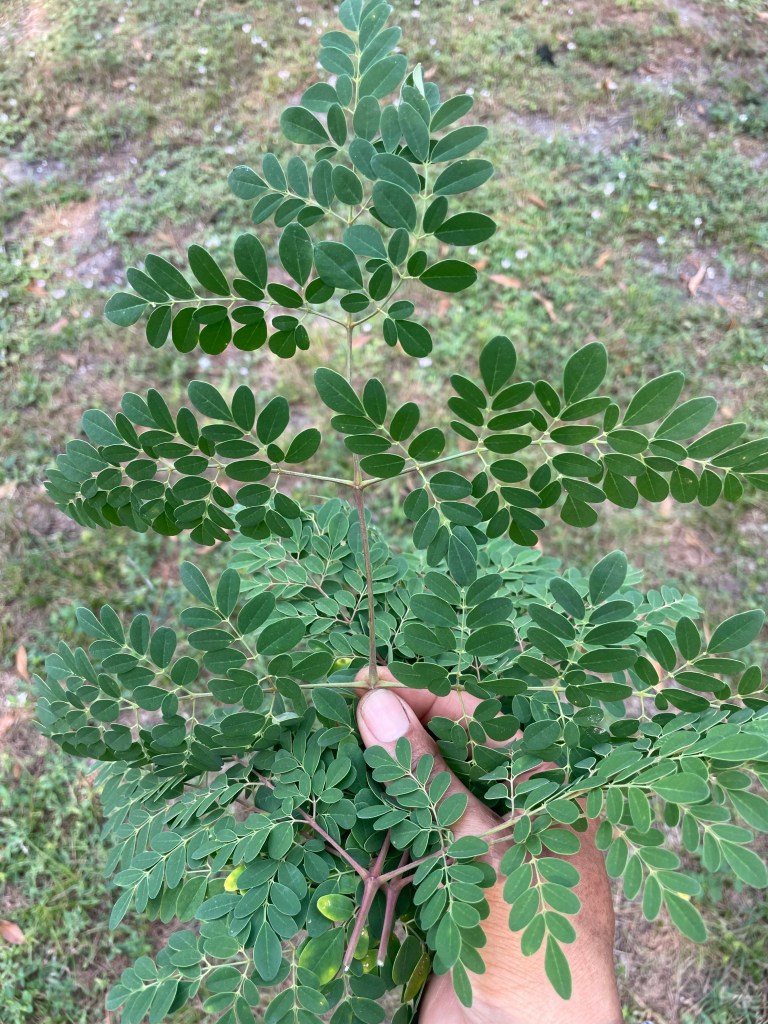
The moringa leaves can be eaten fresh, cooked or dried. The dried leaves can be processed into powder which is commonly added to drinks/smoothies or broths. The immature moringa pods (“drumsticks”) can be cooked & eaten like a bean. Moringa seeds have been used to purify water for drinking or can be roasted & eaten like peanuts. Moringa seed oil has anti-inflammatory properties & has various dermatologic uses. Moringa flowers can be eaten fresh or used to make tea. The roots can be grated & used as a condiment; which is said to taste like horseradish (hence the nickname, “the horseradish tree”).
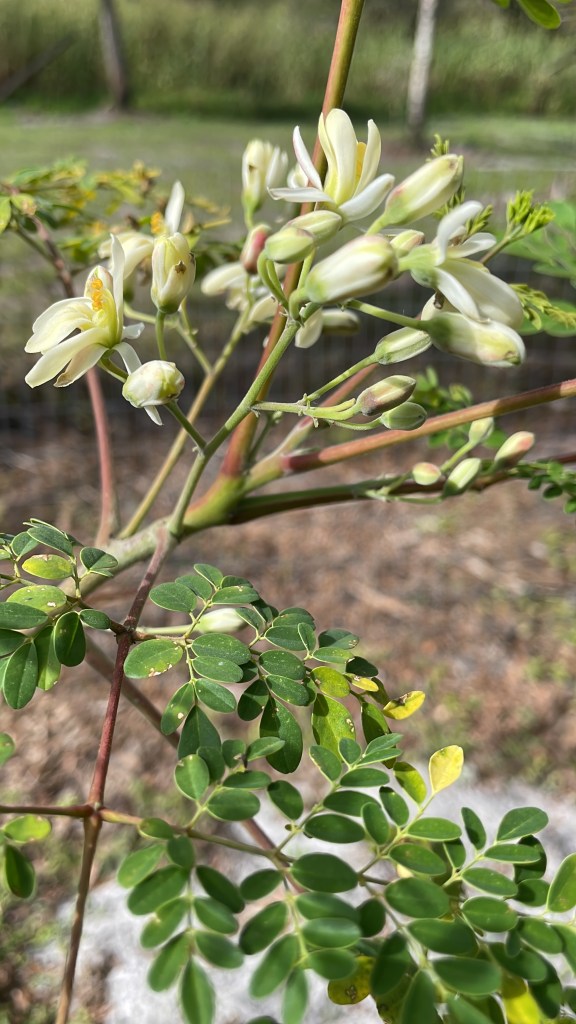
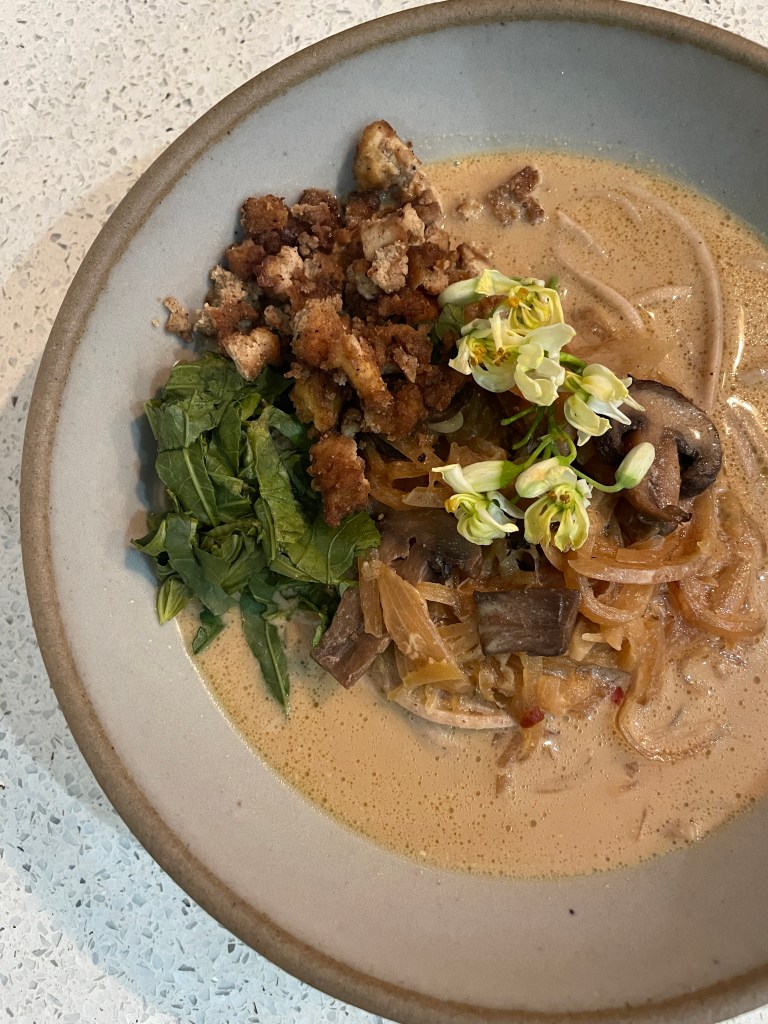
I am fortunate to have several moringa trees growing on at Mahaba Farms. I routinely eat the fresh leaves & flowers & have dried leaves to make moringa powder.
Fresh moringa leaves will be available for purchase in our online store once it opens. I am also working on propagating several moringa trees for sale if you’d like to add the low maintenance, yet highly productive ‘Tree of Life’ to your landscape.
 Mahaba Farms
3 responses to “The Tree of Life”
[heart] Sheree Wolliston reacted to your message: ________________________________
LikeLike
Thank you for sharing such great info about moringa! This dish looks delicious!!
LikeLiked by 1 person
[…] have already shared my fascination with the moringa tree here. Many believe broader cultivation of moringa (the “tree of life”) could be a solution for […]
LikeLike