
Justus von Liebig defined agriculture as “the cultivation or the manipulation of the soil in such a way as to bring about the greatest possible yield of products useful to man with the least injury to the soil and at the least expense.” I’d never heard this quote until recently, yet I had already adopted this ethos.
I’m a scientist by training, so I did consider obtaining a soil analysis to review the specific components of the soil I began cultivating on the farm in the Summer of 2023. Theoretically I could use those lab findings to fine tune the soil to peak growing capacity. That would mean making adjustments in the soil nutrients based on the lab results, then retesting the soil & repeating this process again & again until the lab findings were satisfactory. Not only would repeat testing be costly, but it’s also time consuming & time is the one thing I’m not getting any more of.
I knew I had to address the soil before I could successfully grow anything (good soil=good food). Instead of committing to the path reliant upon numerical data, I decided to rely on my observations & instincts. The plants & their resultant food would tell me how good the soil was. If they grew lush & green with minimal pest pressure or disease & produced great tasting food, then my soil was great👌🏾. It’s hard to argue with results!
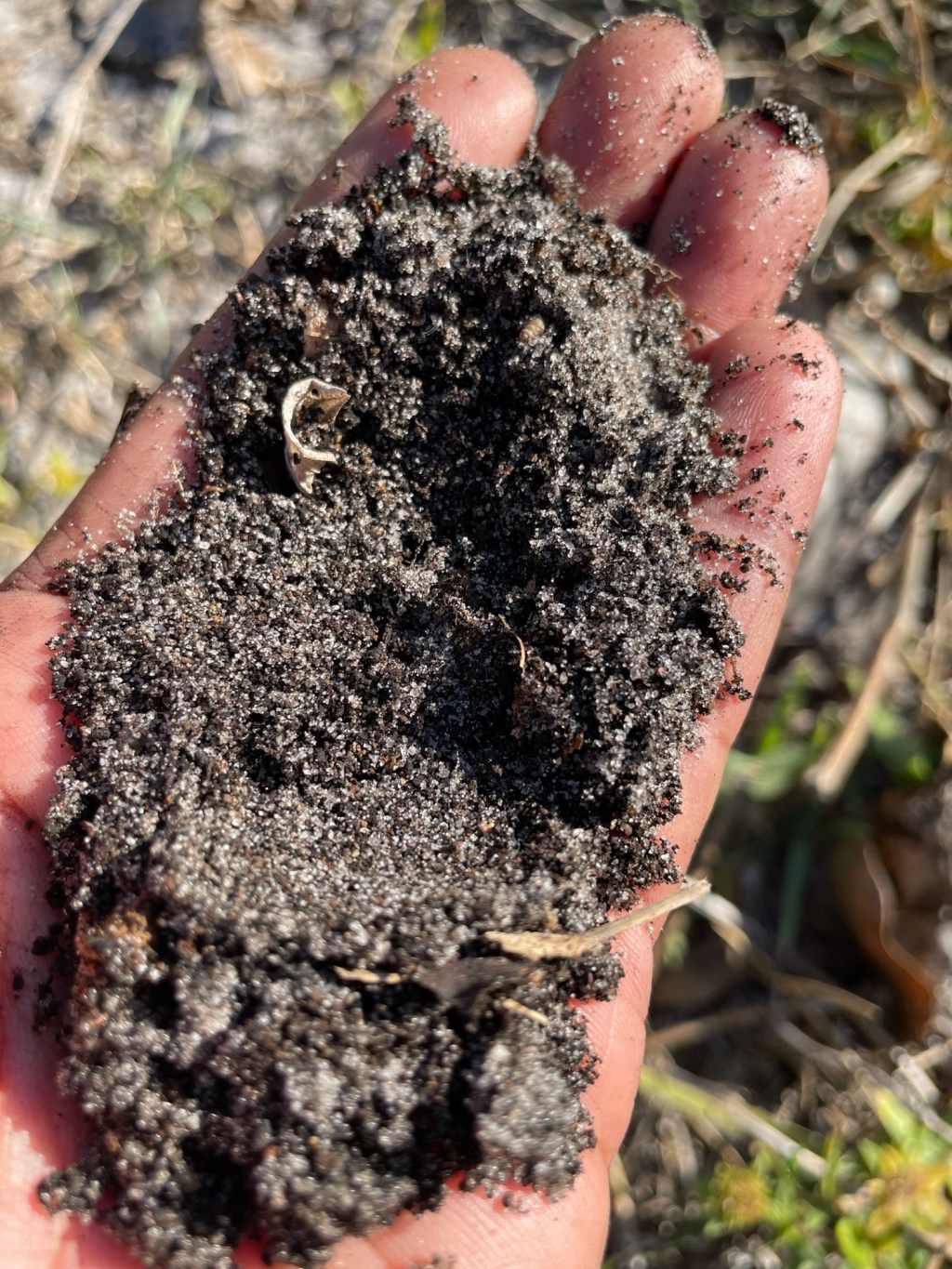
What I was starting with was no more than fine, grey sand😕. I didn’t need a lab to tell me it wouldn’t hold a drop of water for my growing plants or that the light grey color & thin texture suggested it was devoid of nutrients to offer my plants. This nutrient deficit, dry soil makes a perfect home for root knot nematodes & other pests that won’t let me be great.

I couldn’t grow the nutrient-dense food I deserve in this lifeless sand. I began by focusing on the physical rather than the chemical properties of the soil. I trusted that the solution for what the soil lacked physically would also rectify the chemical deficiencies.
It would take an enormous amount of money to purchase the volume of commercial soil I would need to cover my growing space. Not only was spending that amount of money not an option, but I also knew those bags of dead “soil” wouldn’t be able to compete with the living soil I could build over time.
So, I got to work👊🏾. I’ve spent the last 2 years relentlessly chopping & dropping organic matter onto the native soil around my plants. No organic matter left the farm. Everything was used for improving the soil- leaves, sticks, fallen fruit, “weeds,” grass- EVERYTHING.
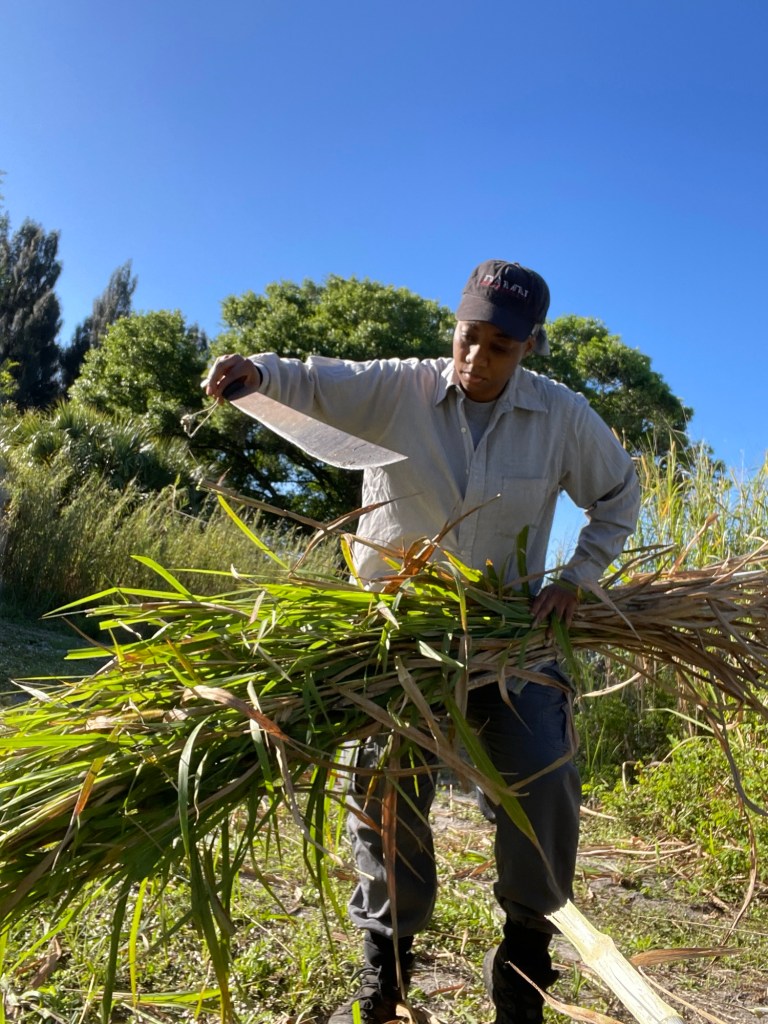
I dotted legumes around the farm, especially around trees, to provide a constant supply of nitrogen to the soil.
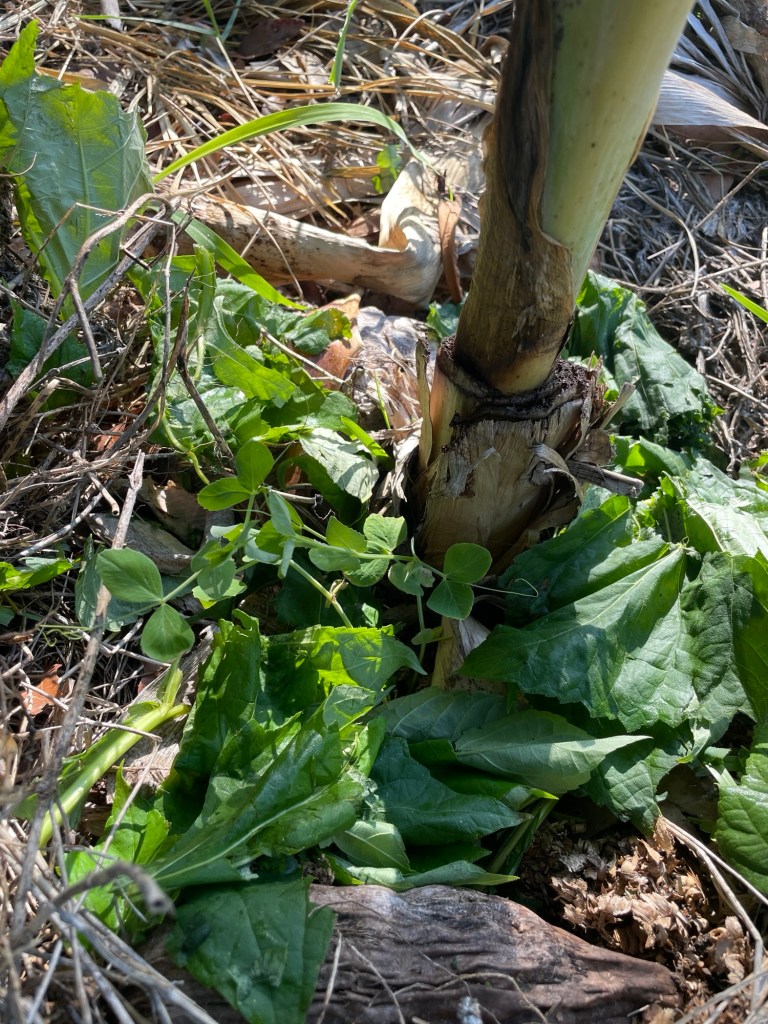
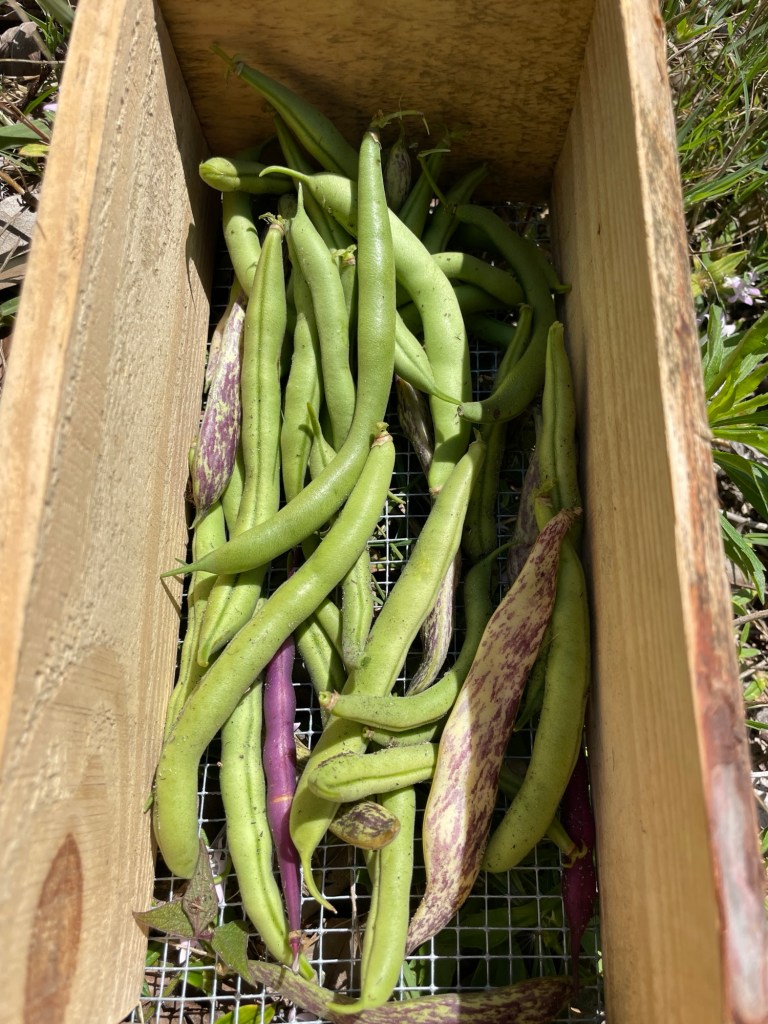
They provided quick & reliable food for me, while also providing fuel for the native soil. When the legume plant died at the end of its season, I chopped it down (leaving the roots in place) & laid the plant matter on the soil to break down & feed the soil over time.
I made an organic liquid fertilizer to feed to my plant roots to supplement the nutrients that the developing soil was unable to initially provide. That allowed me to grow food while awaiting nutrient rich soil.
In less than 2 years, the soil is markedly improved!
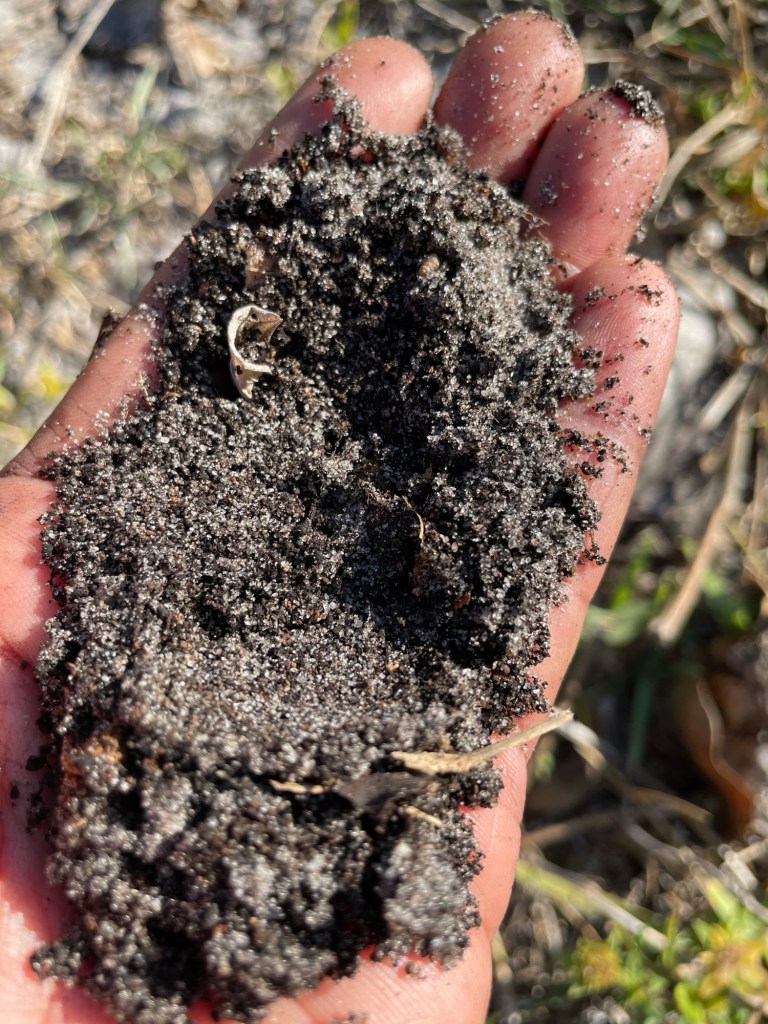
Not only is the soil now thicker & darker, but it holds water well.
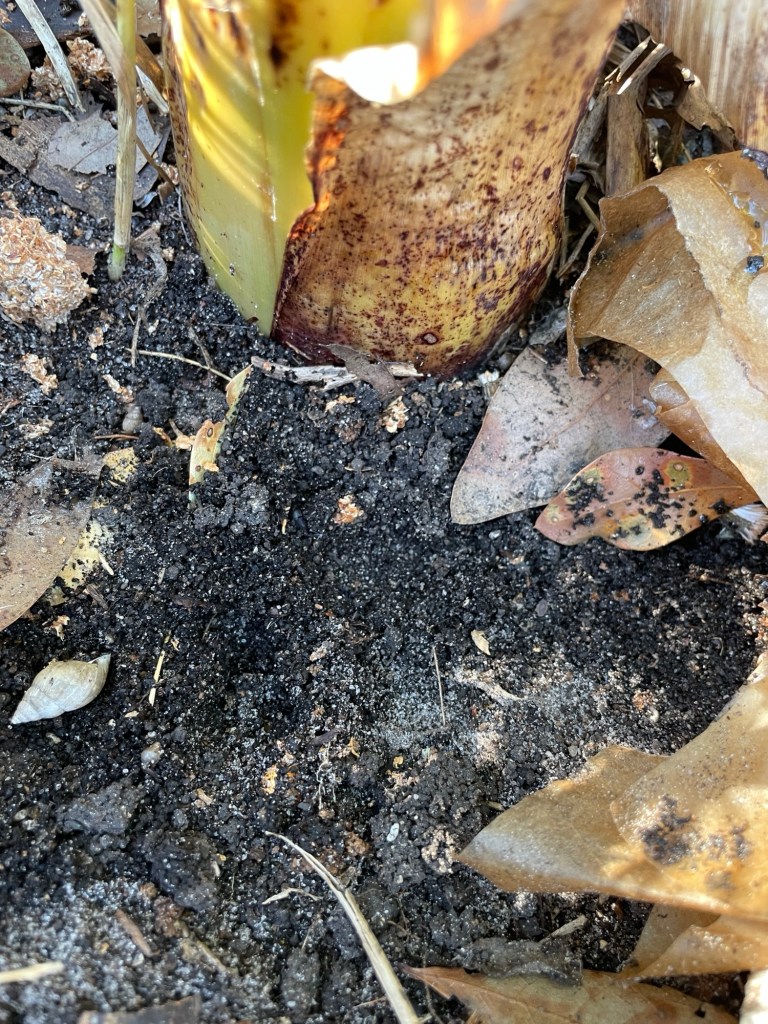
I don’t need repeat soil analyses. My plants are healthy; with almost no diseases & very little pest pressure.
Of course, the work doesn’t stop. Living soil must continually be fed, but now that I’m growing so many diverse crops, sourcing organic matter is easy & “chopping & dropping” around my plants has become second nature.
I won’t always be growing on this land, but I will most certainly leave it better than I found it😇
 Mahaba Farms
2 responses to “Outcome-Based Farming: The Results Speak For Themselves”
MAJOR improvement! Great job! The land thanks you 🙂
LikeLike
Happy to serve😇
LikeLike