
Chaya, also called tree spinach, has been eaten by people all over the world for eons. However, you rarely see it sold or grown in the United States.
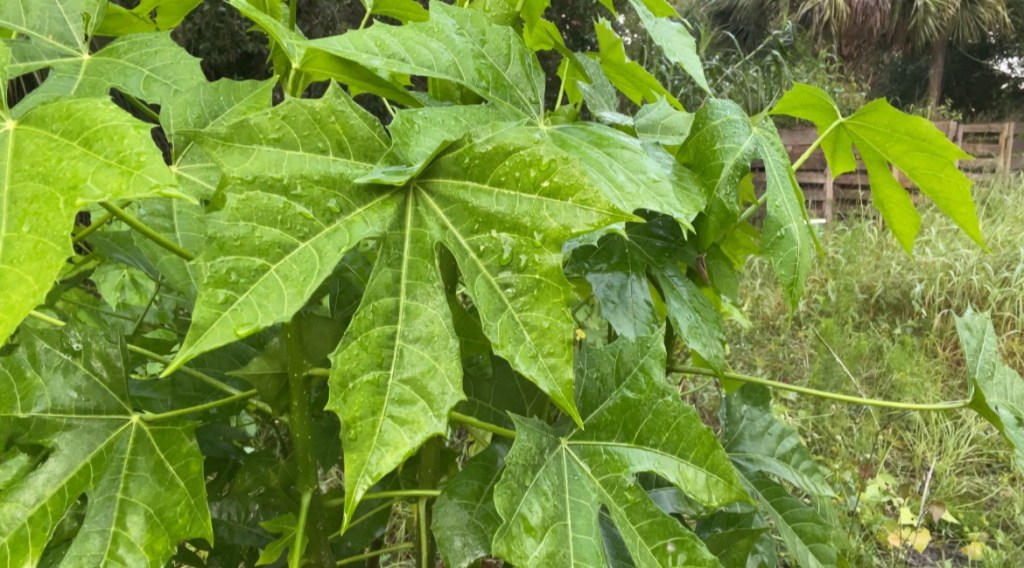
Instead the most readily available spinach in the U.S. is European in origin. My growing conditions couldn’t be more dissimilar to Europe😶. Rather than expend a lot of resources & frustration creating an artificial growing condition to make European spinach grow in south Florida or do without spinach in my diet, it makes more sense to me to cultivate a spinach variety that wants to live here.
Chaya is a hardy, perennial plant that grows easily from cuttings. Its leaves are nutrient-dense, containing high levels of protein (as much as 7.5g per serving; more than most leafy greens), calcium, iron, vitamins A & C & amino acids. The leaves contain a cyanide derivative, so chaya CANNOT be consumed raw. The process of making the leaves safe to eat is simply to boil the leaves in a non-aluminum pot of water for 20+ minutes. Through boiling, the cyanide is released in gaseous form. What’s left are nutritious, tender greens that can be used as one would use steamed/braised European spinach, as well as an enriched cooking water that can be consumed and/or fed to plants as a liquid fertilizer.
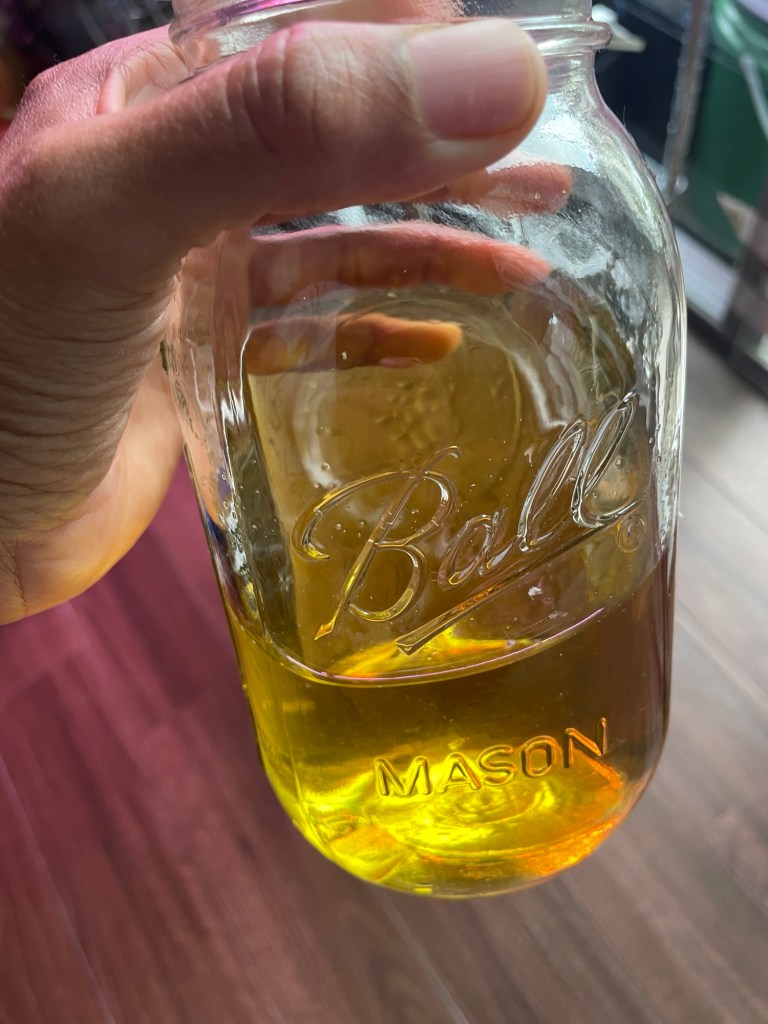
As my south Florida climate is very similar to climates that chaya is naturally adapted to, it was a no-brainer that I had to grow chaya.
The limited (read: non-existent) local chaya supply might make that a challenge, but thankfully the Internet came to the rescue, as usual. I was able to purchase chaya cuttings online last Spring.
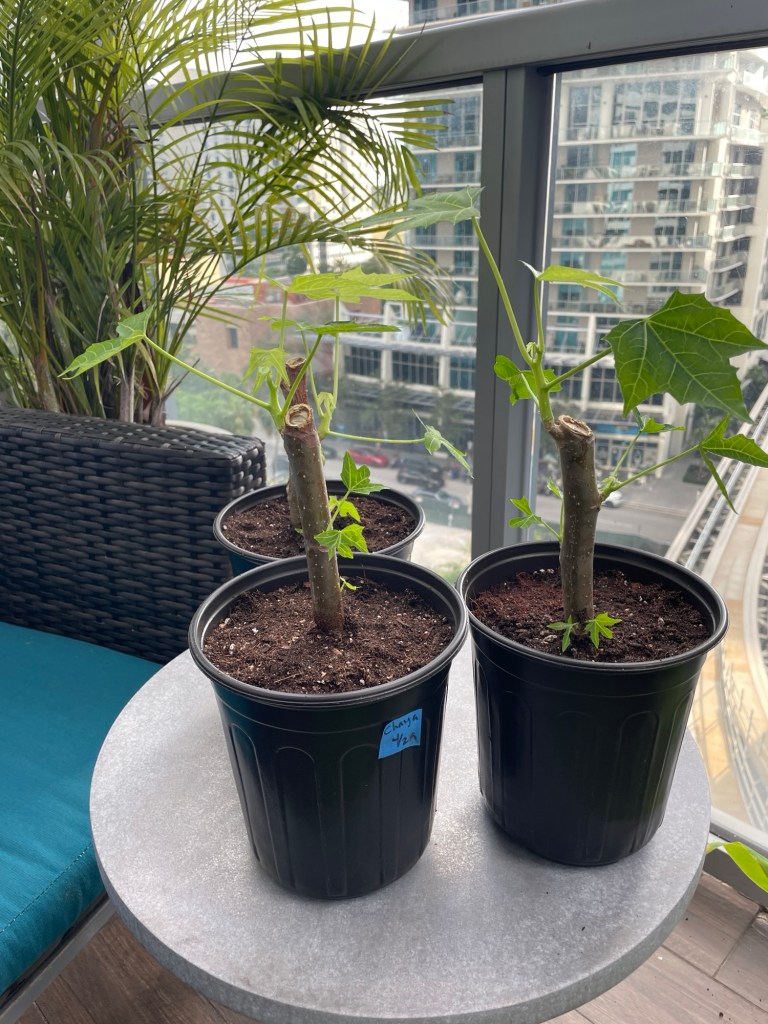
Most of the cuttings successfully rooted & today I have tree spinach that is as tall as me & will almost certainly outlive me!
This is my first year of having enough chaya to harvest & BOY are they thriving in the Summer heat!
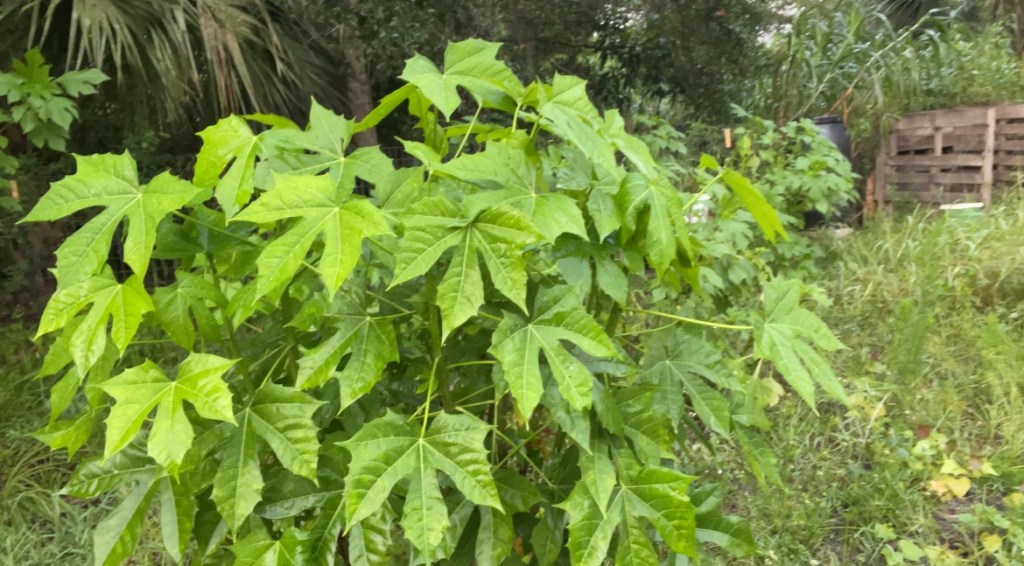
My favorite way to enjoy chaya so far has been in a lemongrass broth-based soup with home baked garlic sourdough bread😋
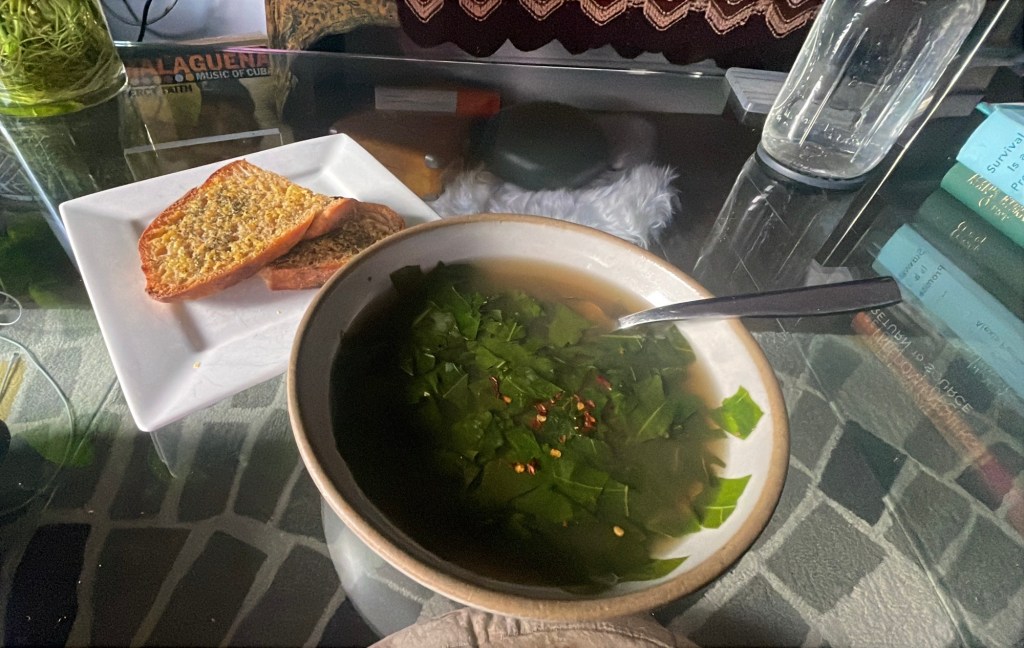
I’ve also added chaya to curries & stir-fries. My experimentation with chaya will no doubt continue for years to come. This reliable vegetable will be a bedrock of the sustainable food system I’m creating. I will also use its nutritious plant material to break down & fertilize my other plants🔁.
I’ve begun taking cuttings from my own trees to propagate more chaya plants.
With the addition of chaya, I’m another step closer to the closed loop/self-sustaining, abundant food forest of my dreams. Hopefully it will serve as a proof of concept. You don’t need a lot of space or a lot of money to grow food in a regenerative way. You mostly need determination & a willingness to “go against the grain.” Thankfully, I’ve been blessed with plenty of both of those ingredients😇
 Mahaba Farms
2 responses to “Chaya: Not Your Colonizer’s Spinach”
[…] mentioned chaya before (pictured below). This prehistoric food has been a staple crop in many cultures for eons. It now […]
LikeLike
[…] also got several Longevity spinach & Chaya/Tree Spinach plants that are primed for […]
LikeLike