
After gaining access to the land that was to become Mahaba Farms, I walked the land for hours to familiarize/introduce myself & give thanks. A scraggly tree with few leaves, but clumps of yellow & red fruit caught my attention. I’d never seen the tree or its fruit before.
An elder arrived later & was very excited to see this tree, but he didn’t know the name. He told me the tree is rather rare here. He assured me the fruits are edible & taste like a sweet plum.
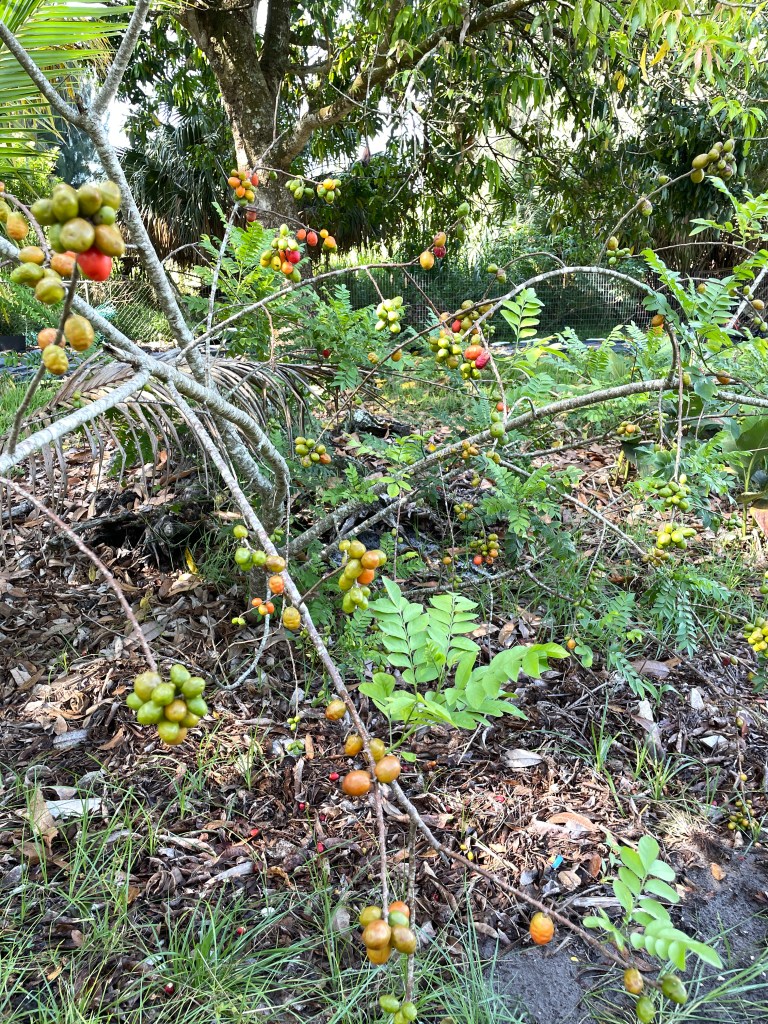
I had to try it! Without a word, we each selected a red fruit from the tree. He advised me to eat the fleshy, red pulp, but avoid the large internal pit. I watched him quickly devour the fruit & toss aside the pit; then it was my turn.
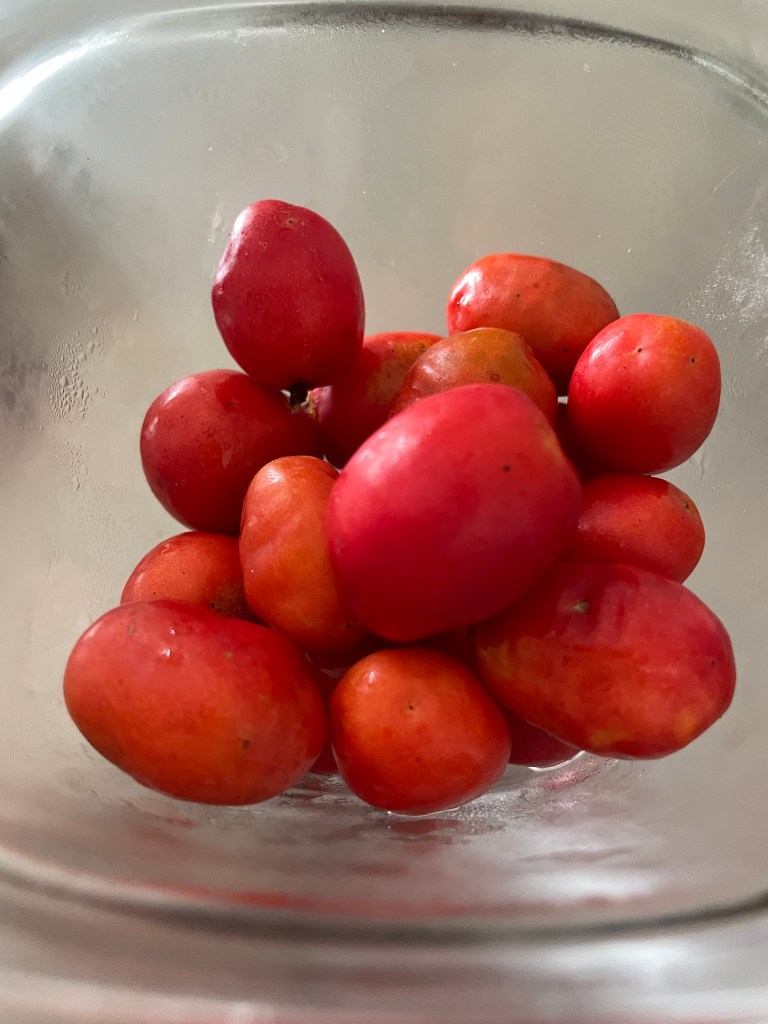
He was right! The fruit tasted like a sweet plum with a hint of tartness. I loved it!
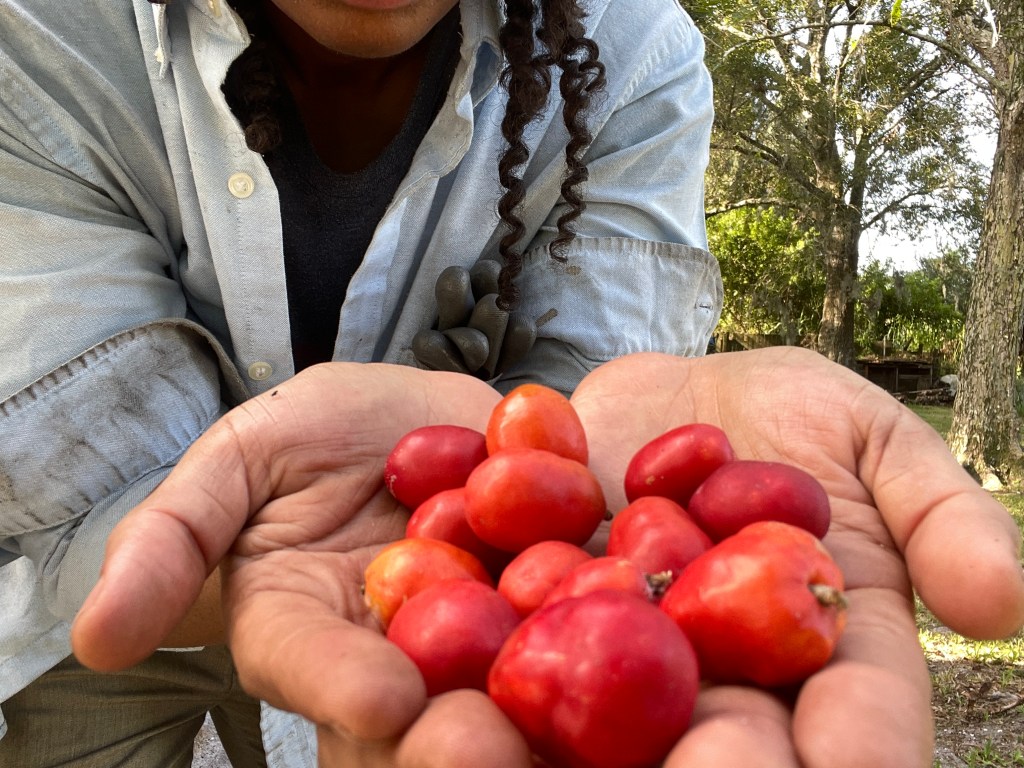
I asked around, but- of those who recognized the fruit- no one knew what it was called; only that it was delicious.
Thanks to a plant identifying app on my phone, I came to know this delicious fruit as “jocote” (pronounced ho-coe-tay). Jocote (derived from the Nahuatl word meaning any sour or acidic fruit) goes by several other names, including Ciruela (Spanish for “plum”), Spanish Plum, Brazilian Plum, Hog Plum, Jamaica Plum.
Jocote is native to parts of Mexico & Central America. It has since been introduced & naturalized to the Philippines, West Africa & several Caribbean islands.
Jocote is high in vitamin C, antioxidants & carbohydrates. It is also a good source of calcium, iron, phosphorus, B-complex vitamins, fiber & amino acids.
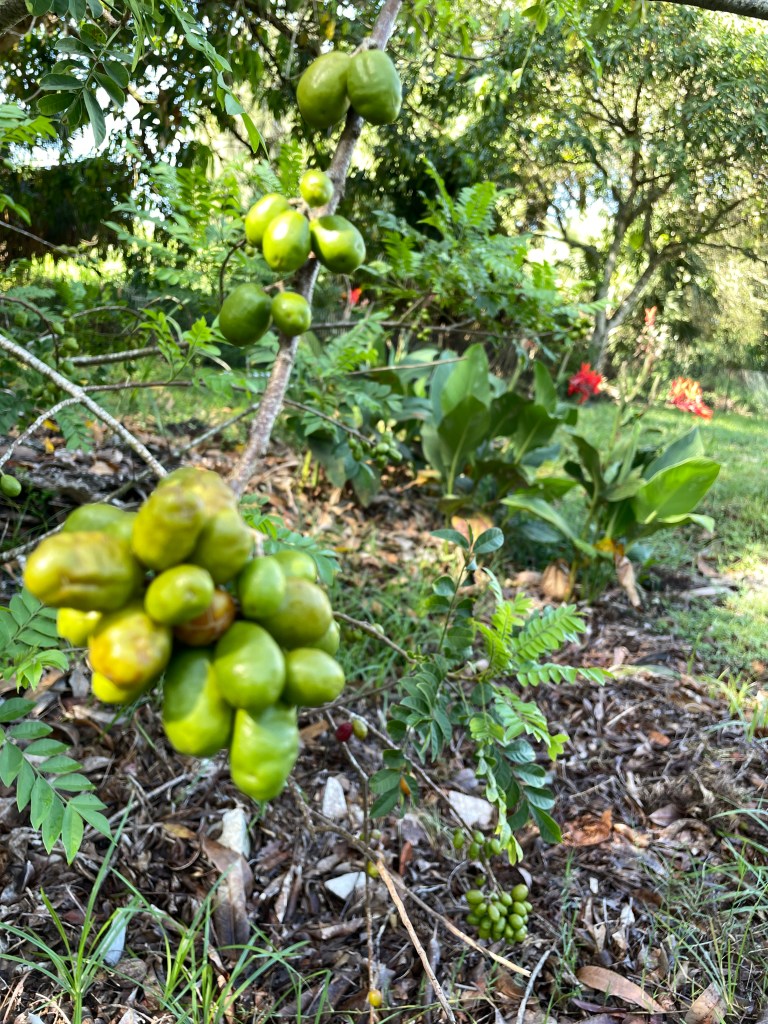
The jocote tree is prized for both its culinary & medicinal properties. The jocote fruit is typically eaten ripe & raw- like a plum or mango- but can be made into jams, drinks, syrups, etc. The unripe (green/yellow/orange) fruit is also edible, but tart. It can be pickled or used to make a tart sauce.
Medicinal uses for jocote vary by region & are numerous. For example, native Amazonians use a decoction of jocote bark for pain, excessive menstrual bleeding & for washing wounds. In southwestern Nigeria, the shredded leaves are used for washing cuts, sores/ulcers & burns (Researchers from the University of Ife found that an aqueous extract of the jocote leaves has antibacterial effects & an alcoholic extract was even more effective). Haitians have been known to use the fruit syrup for angina & Dominicans use it as a laxative.
The tree is used as a living fence, especially in the Panamanian & coastal Ecuadorian countryside.
For now, our single jocote tree produces just enough fruit for me to snack on while working, but the tree reportedly propagates easily. I hope one day to produce enough jocote to share with our community.
 Mahaba Farms
3 responses to “A Rare Tropical Fruit Surprise”
Mmm…more jocote, please😋
LikeLiked by 1 person
I never heard of that fruit, thanks for introducing it to me! Would love to taste it one day!
LikeLiked by 1 person
[…] Summer propagation of jocote (& many other fruit) trees is still […]
LikeLike