
Most people have a strong opinion about okra one way or another. Whether you personally enjoy eating okra or not, it’s impossible to deny the cultural significance of okra in the Southern United States.
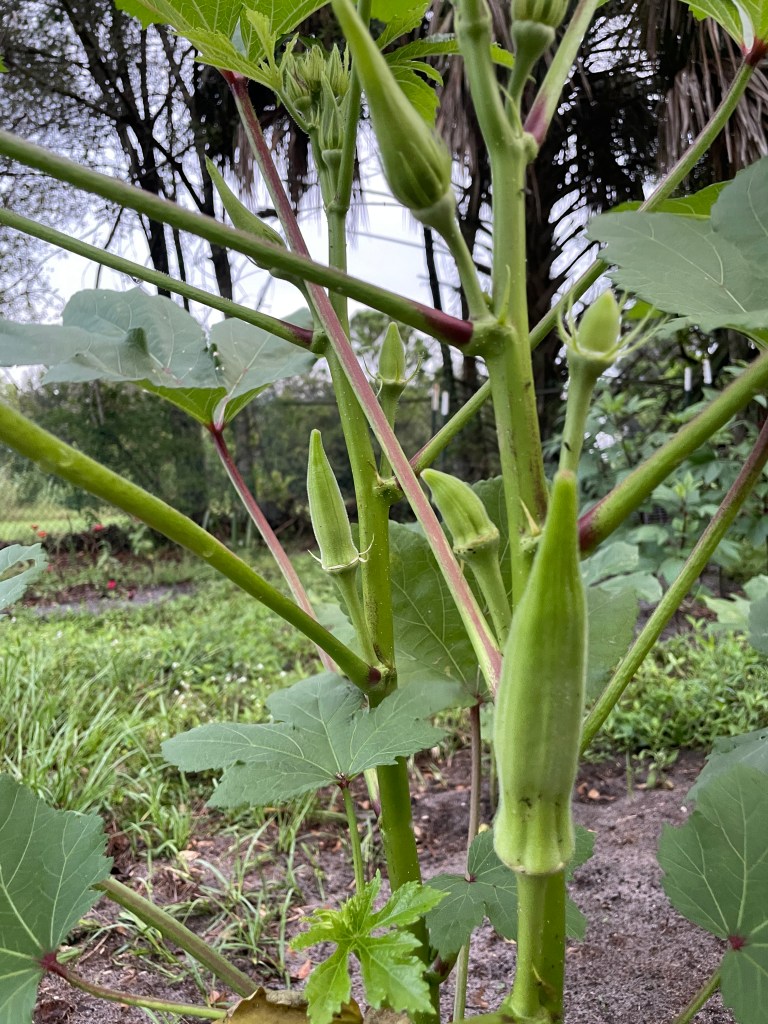
Originating in West Africa, okra is technically a fruit, but is widely considered & consumed as a vegetable. Okra made its way to the United States via the brutal industry of the trans-Atlantic slave trade between the 16th & 19th centuries. Stories are told of African women clandestinely braiding seeds into their hair before beginning their forced odyssey to North America. Despite the nightmare that awaited them abroad, they had the audacity to plan for their survival via the sovereignty of crop cultivation.
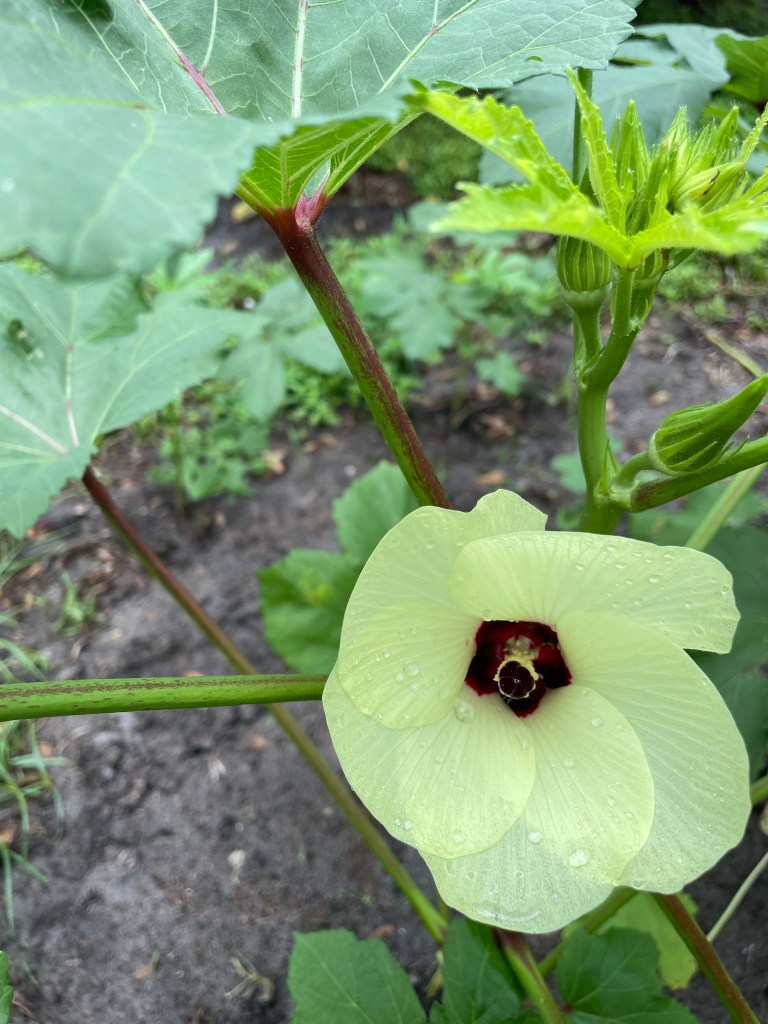
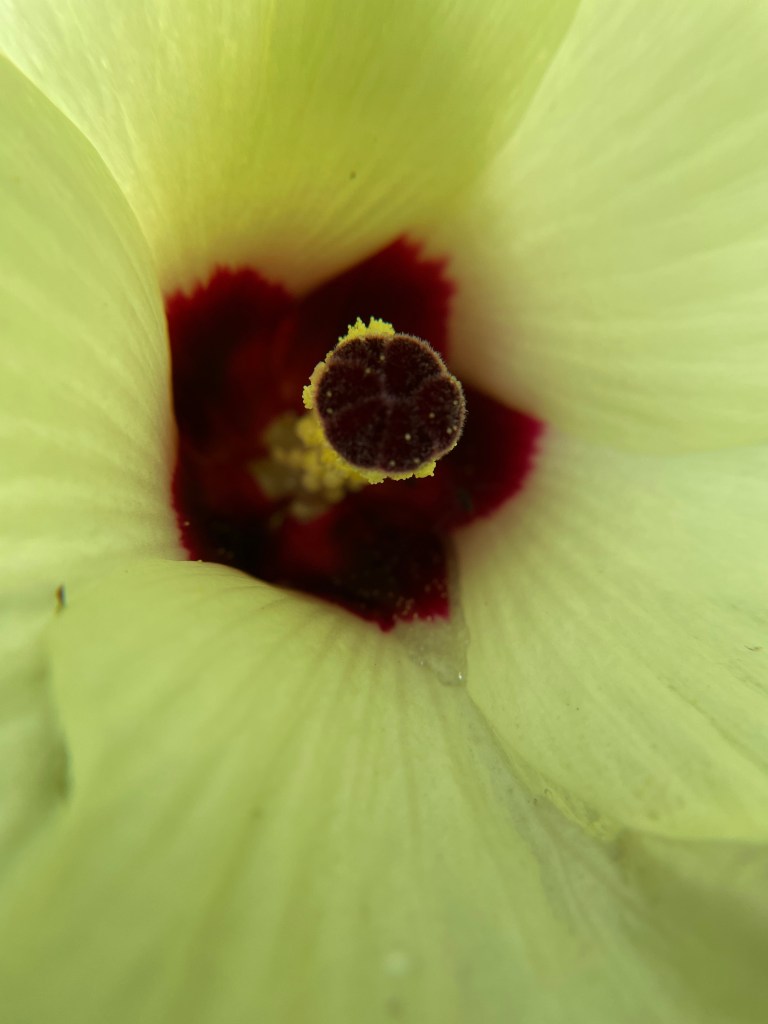
The climate of the American South was especially suited for the heat-loving crop & okra quickly became a staple food in southern cuisine; for people of all races.
Enslaved Africans grew okra in their personal gardens as a way to fortify themselves against natural/designed (withheld by the slave master) food shortages. The okra pods were eaten in stews/soups (eventually culminating in the creation of “gumbo”- taken from the Angolan word for okra, “kingombo”); classically stewed with tomatoes or fried. The okra seeds were roasted & brewed as a coffee substitute by enslaved Africans. Medicinally, okra leaves were mashed & applied to inflamed areas & the slimy substance found inside okra pods was applied to the uterine passage to induce abortions.
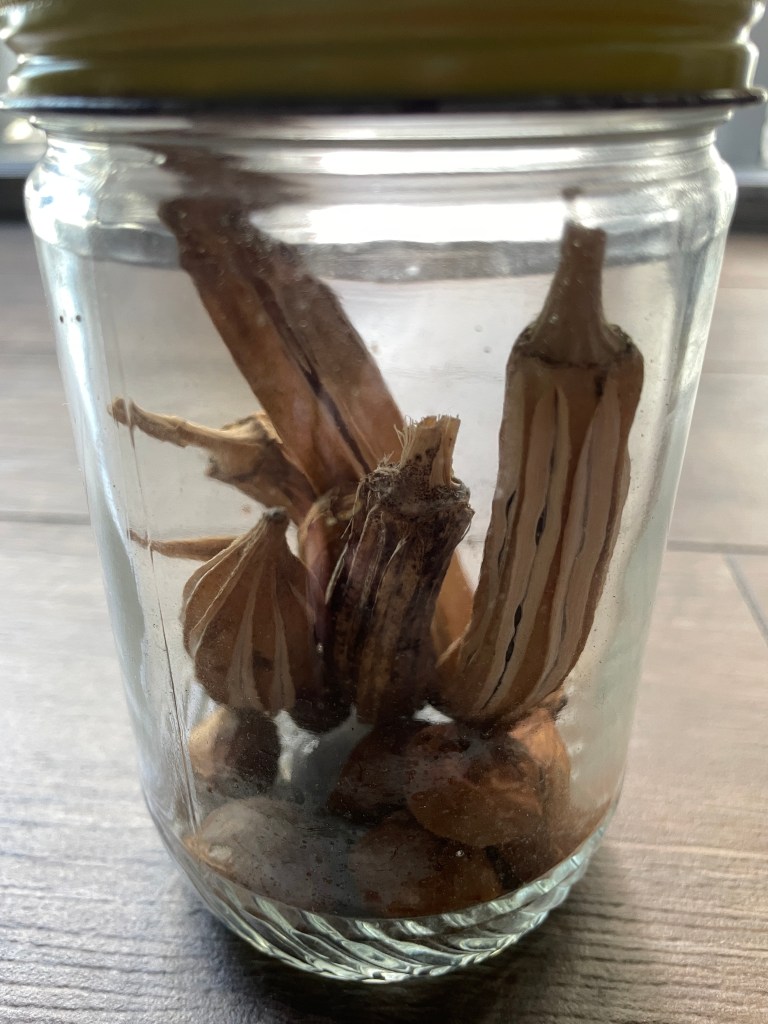
Centuries after the American enslavement of Africans & nearly a decade after my Granddad, Leroy Waters, died, I found a small mason jar of dried okra pods amongst his things.
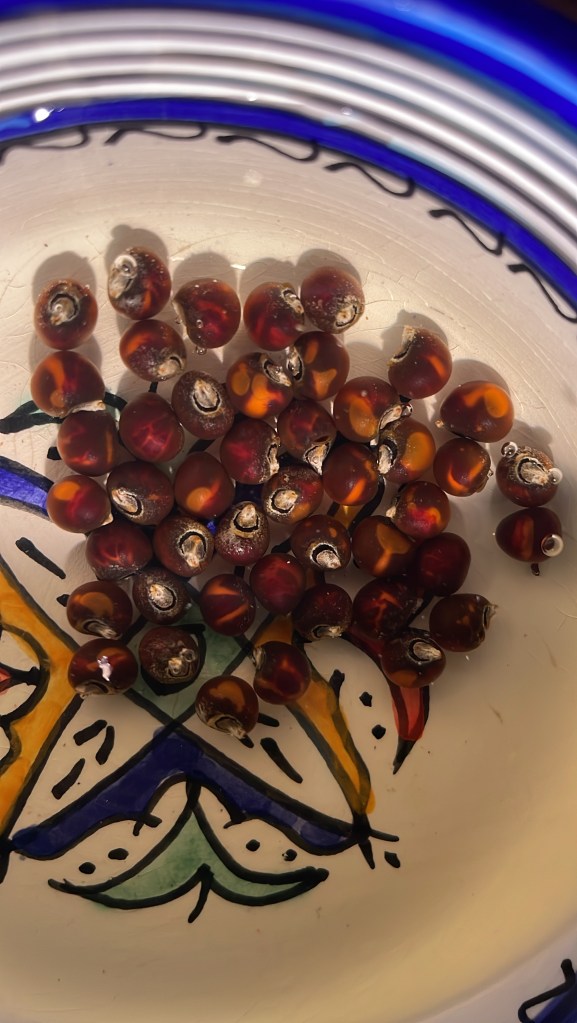
The realization that my direct Ancestor (Granddad) thought enough of this plant to save the seeds- only to be found decades later by his granddaughter; now stewarding family land- reminded me of my responsibility to my more distant African Ancestors who smuggled the okra seeds onto this stolen land (“America”) & grew the plant as a means of resistance & survival.
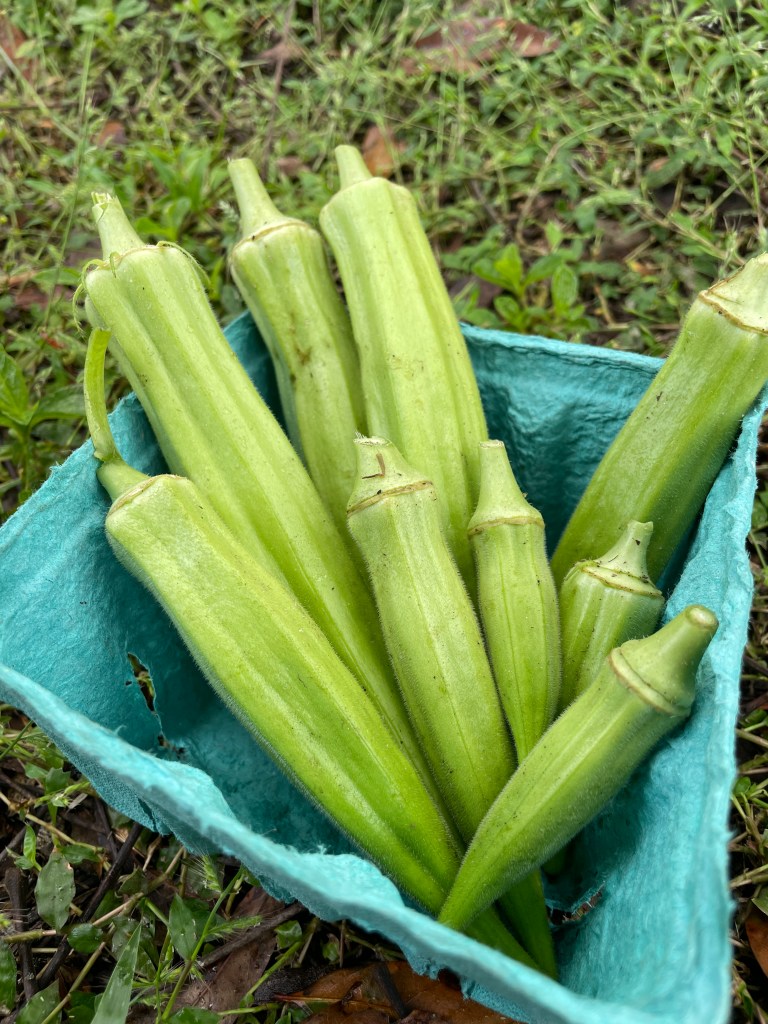
Though personally indifferent to the consumption of okra, I know that continuing to cultivate this culturally significant crop is part of my duty as a member of the privileged few descendants of enslaved Africans with access to land in the United States.
Unfortunately, I was unable to coax Granddad’s old okra seeds to germinate, but I was fortunate to obtain heirloom Clemson okra seeds; whose plants provided generously this summer.
I saved seeds from this summer’s yield, so that I can continue to cultivate okra on this land for as long as I’m here. We honor our Ancestors by keeping seeds & telling the stories of the plants & their previous stewards. May my Ancestors be glad. Asé.
 Mahaba Farms
4 responses to “An Anti-Colonial Lens on Okra”
Yeees👏🏾 Well said + beautifully captured😊
LikeLike
Thank you for a well told enlightening and inspiring lesson on the okra plant. Who knew that the seeds from the plants were brought to this country by our ancestors….I certainly didn’t! Thanks again!
LikeLiked by 1 person
Thanks for a true lesson in history. A well written, thought provoking and an article that should be apart of our everyday conversation. You are so true to your heritage. God Bless you in your journey as you continue to grow and cultivate your garden.
LikeLike
I love how you give us a whole different vibe on things most of us take for granted! Beautiful photos as well. Never would have thought okra looked so beautiful.
LikeLiked by 1 person