
I can’t say I knew I’d ever be preparing to purchase thousands of worms. Who could see that coming?
It all began with a desire to improve the soil so that I can grow high quality, nutrient dense food. Sounds simple enough, but when you add the constraints of a minimal budget, being sustainable & self-sufficient (i.e. a closed loop system), it becomes more complicated…in the best possible way.

Vermicomposting (using worms to make compost) was an obvious solution to address all of my self-imposed constraints. The worms will eat anything that is or once was living (they can eat the equivalent of their weight each day), i.e., kitchen scraps, coffee grounds, newspaper, cardboard, etc. The worms (& other invertebrates that decide to make the worm bin their home) break down the organic material they’re fed. Their resultant excrement (called ‘castings;’ otherwise known as ‘black gold’) is a dark, natural fertilizer; rich in nutrients & beneficial micro-organisms.
I’ve been deeply submerged in all things worm-related for months (not a sentence you hear everyday- LOL). Once I identified the proper earthworm species for my needs/conditions (the Red Wiggler), I set out to learn all I could in order to best care for them & ensure they live comfortably. Most people call this practice ‘worm farming,’ but I prefer instead to think that I’m establishing a worm sanctuary. My respect for all living things extends to our worm friends as well. I will care for them to the best of my ability. Thankfully, they’re known to be rather low maintenance.
Caring for worms outdoors in south Florida has some obvious challenges- namely the heat. In this setting, the worms will appreciate near total shade. I allocated the perfect spot for the wormery beneath a mature mango tree planted many decades ago by my great grandfather.
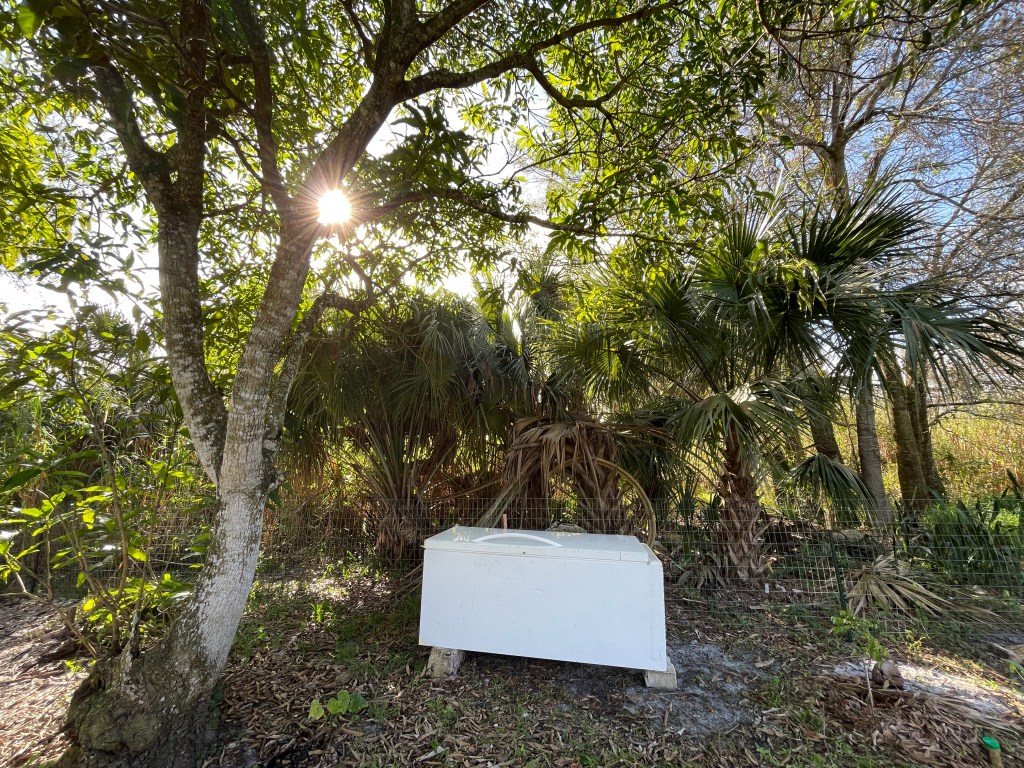
I opted for an old freezer as my “worm bin” since it’s built heavily insulated & should therefore be easier to maintain a comfortable interior temperature.
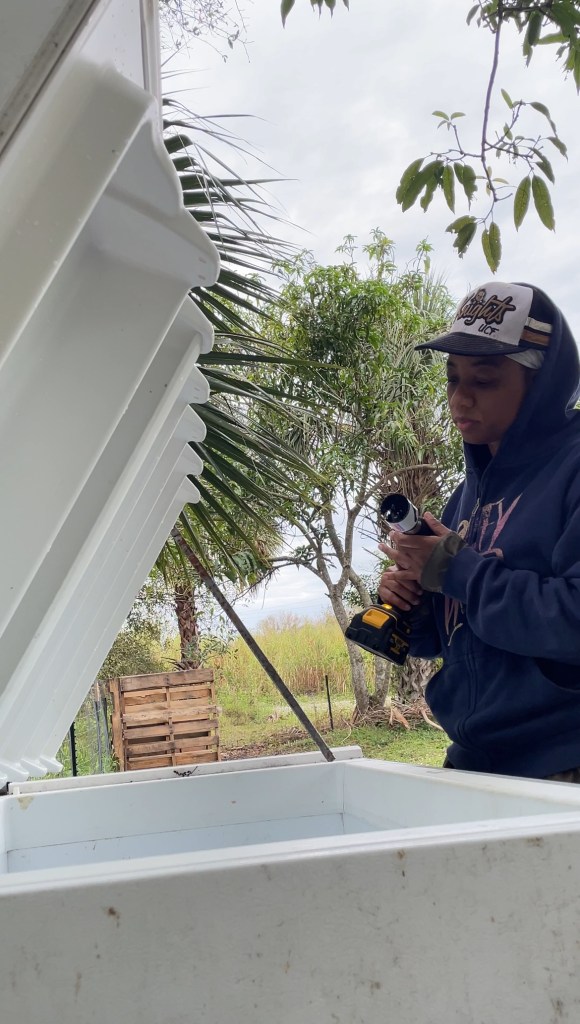
I had to drill a few holes into the freezer walls for ventilation & drainage, but I don’t believe this will too negatively affect the interior temperature & humidity. It helps that the worms prefer to stay a few inches below ground so their experienced temperature will be less than the ambient temperature.
I’ve been collecting & methodically shredding cardboard for months in preparation for establishing the worm bedding. Plus I layered (think lasagna) farm-made compost with dry leaves, fresh moringa leaves, coffee grounds & beach sand for a more complex, rich bedding= better end product compost= BLACK GOLD!
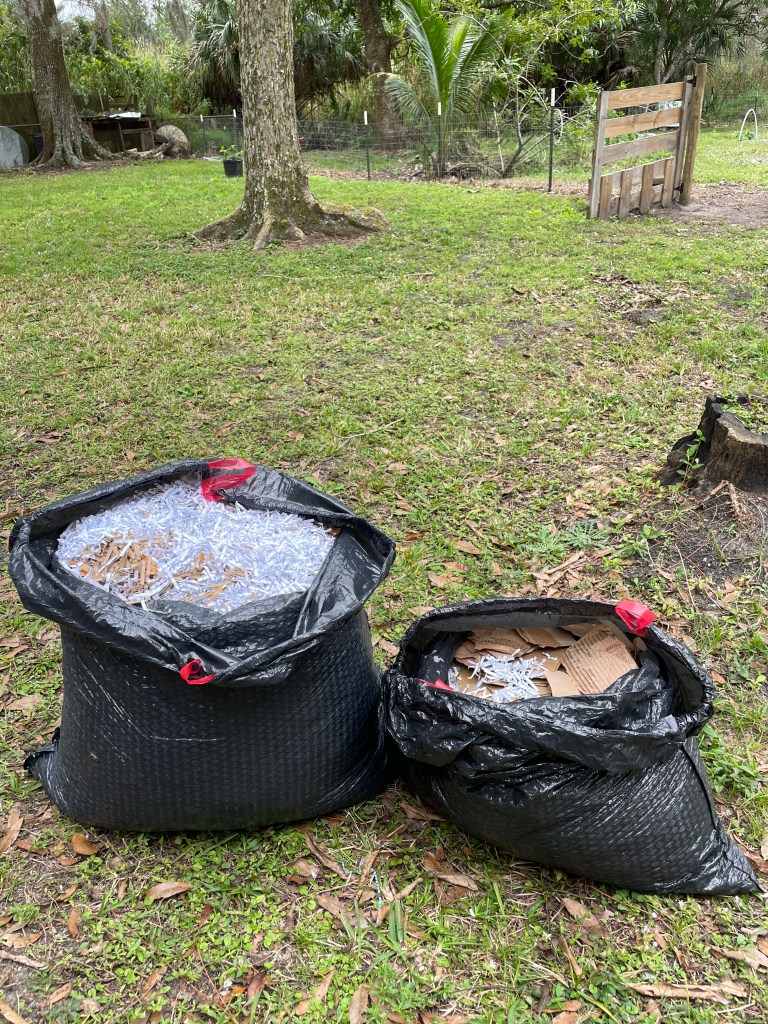
I hope my worm friends appreciate all of my attention & intention in creating their new home. I believe they’ll find their accommodations satisfactory & settle in quickly. Excited to be welcoming the new crew soon!
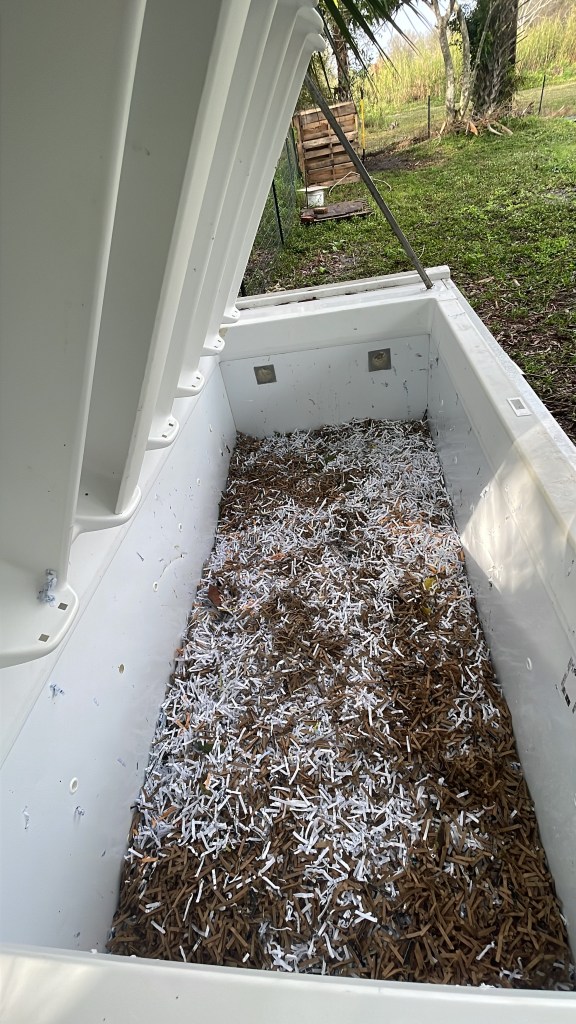
If you’re interested in seeing how I assembled the worm bedding, the video below is for you!
 Mahaba Farms
6 responses to “Mining For Black Gold”
I love this so much! And, video was FIRE!
LikeLiked by 1 person
😘
LikeLike
[heart] Sheree Wolliston reacted to your message: ________________________________
LikeLike
Looking forward to seeing how fast the worms can break all that down!!
LikeLiked by 1 person
[…] the soil; helping to keep these water loving plants happy. The shredded cardboard (as I learned in creating my worm bedding) holds moisture like a sponge, so will serve as a moisture sink in the sandy soil; as well as a […]
LikeLike
[…] (compared to sheets or torn cardboard), so makes an excellent addition to the compost bins. The worms love to nest in the shredded cardboard, as well as eat […]
LikeLike