
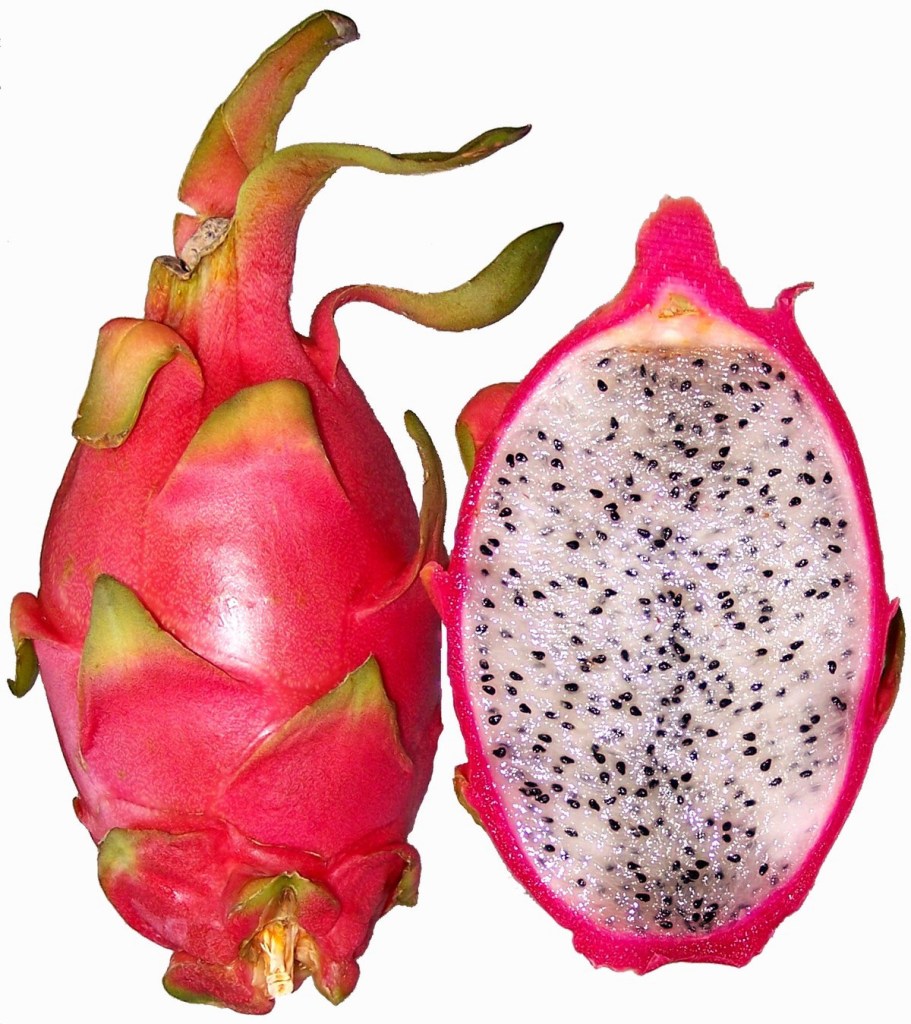
Local practice would dictate I grow dragonfruit (a.k.a. pitaya) on a trellis constructed of wood & cemented into the ground.
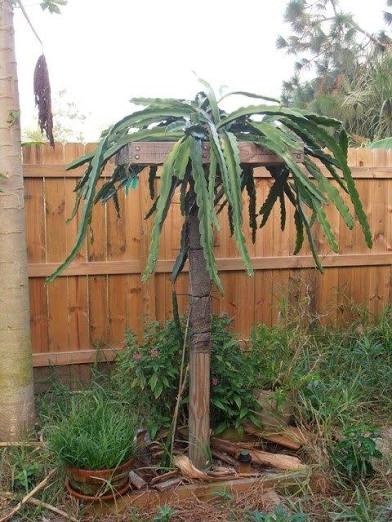
I believe that even if one removes the burden of labor, this cultivation method has several shortcomings, but to each their own.
For me, building a structure to RESEMBLE a tree for the naturally epiphytic dragonfruit (a climbing cactus that grows clinging to trees in the wild) to grow on didn’t make much sense when I considered that I already have REAL trees growing on the farm.
Turns out I’m not the only person who thought this. The Shuar people of Ecuador (& other Indigenous peoples of Central & South America) have been successfully cultivating dragonfruit on trees for CENTURIES. The dragonfruit grows like a vine; climbing its way up the tree. The vine can be trained to remain below a designated height for easier fruit harvest.
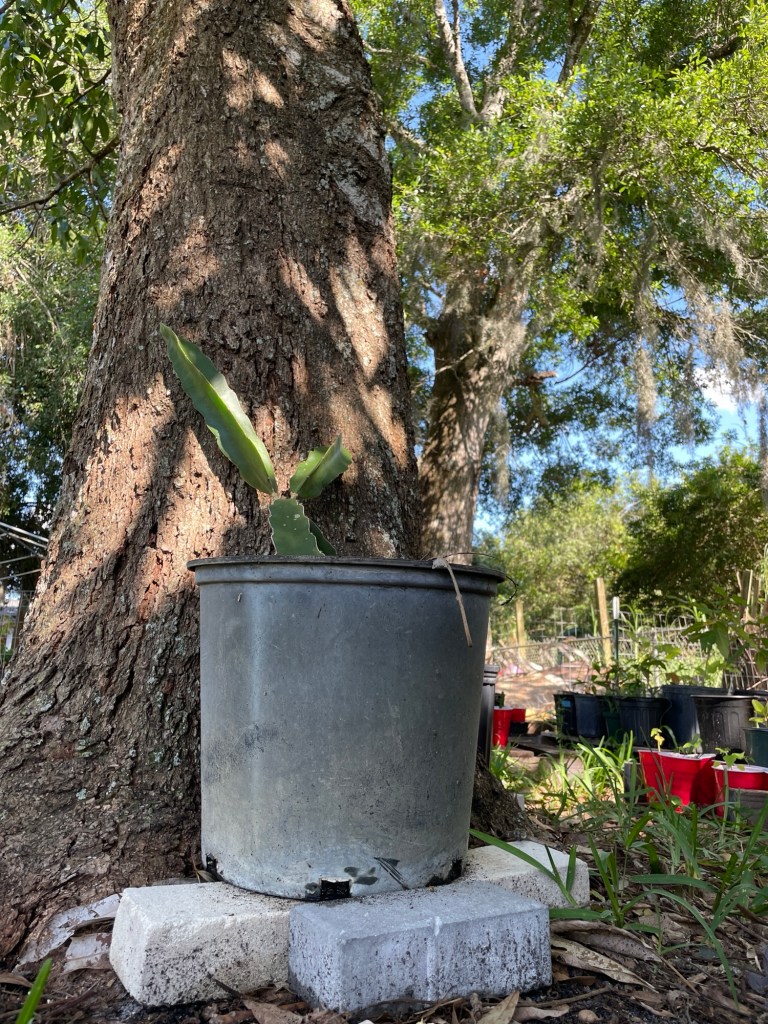
Not one to shirk ancient ecological wisdom, I am using the farm’s well-established mango trees as natural trellises for the three varieties of dragonfruit I’ve acquired (& multiplied) over the last year.
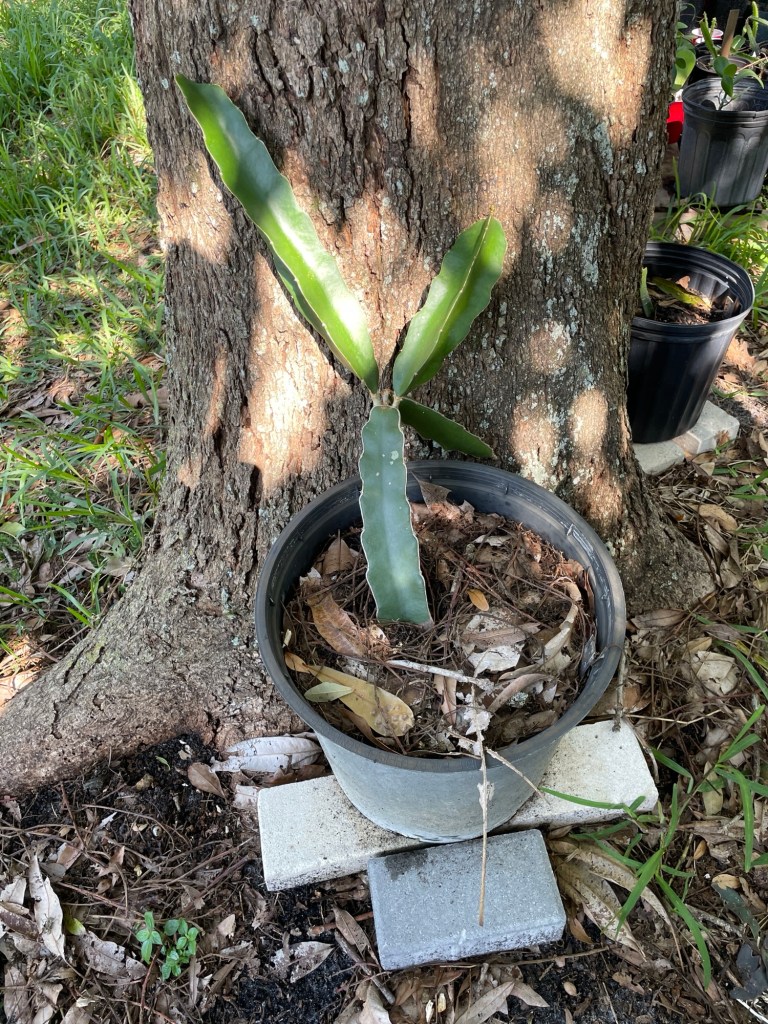
I hope to one day see brightly colored dragonfruits hanging from the mango trees like ornaments, but even if that doesn’t happen- for whatever reason- cultivating this plant using Indigenous wisdom feels aligned😇


One response to “Local Dragonfruit Cultivation With Indigenous Guidance”
Indigenous practices for THE WIN✊🏾
LikeLiked by 1 person