
I was toiling on the farm one cool April morning, when something moving in my right periphery caught my eye. Even once I put my full attention on it, I had no idea what I was looking at. What I knew was there was some sort of deadly looking bug (being black with a neon back stripe😰) absolutely COVERING one of my Mexican sunflower plants😱. I broadened my gaze to surveil the plants surrounding me & this bug was on ABSOLUTELY! EVERYTHING!
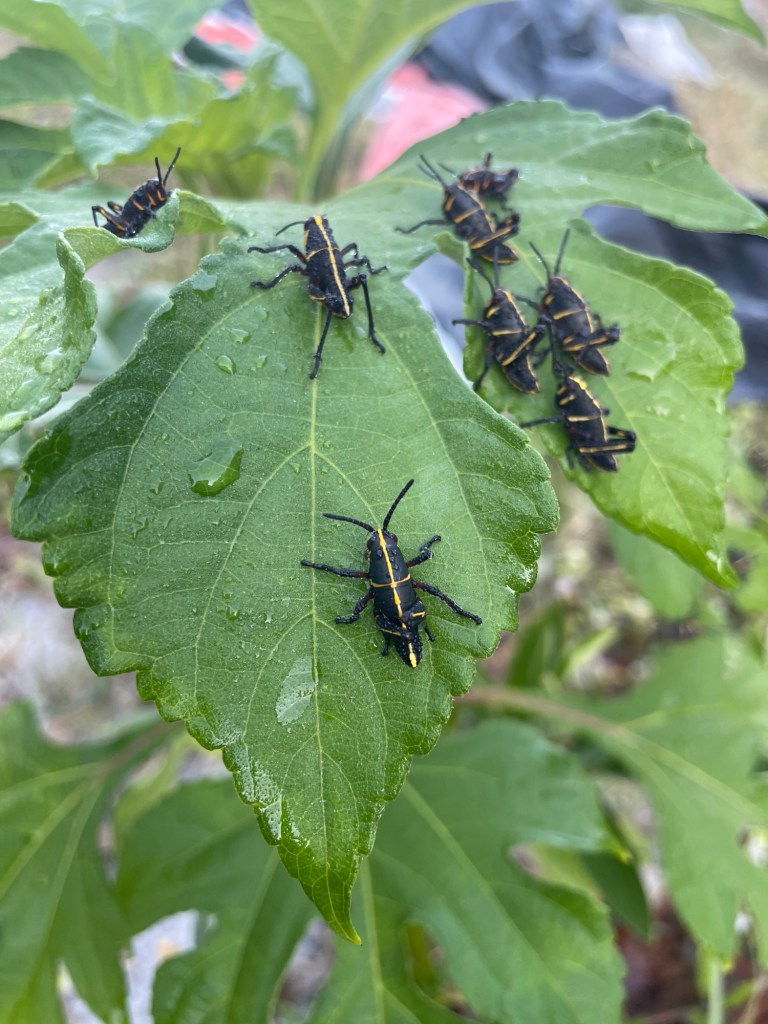
Closer inspection revealed what was a 3 foot tall, thriving papaya seedling now was a green stick in the ground; devoid of every single leaf😳. I’ve never seen anything like it!
Not only had I never seen this bug before, but I’d never before experienced the panicked compulsion to spray something– anything– in a desperate attempt to rid my farm of this infestation😩
Of course, I knew that spraying poison on the soil that feeds me & will seep into the underground water table for my use is suicidal. Not only that, but I assumed this bug has a role to play in the ecosystem, though that system was looking pretty imbalanced🥴
I took a deep breath, pulled out my phone & used the above image to do a Google search & identify the pest.
Turns out this ravenous pest is the Eastern lubber grasshopper. It is native to Florida (& the southeastern United States), but somehow in my 40+ years of life, I can’t recall ever seeing it. Though it looks menacing & sometimes emits a hissing sound when threatened, the Eastern lubber grasshopper is not harmful to humans. Your plants- on the other hand- are an entirely different story☹️. The grasshoppers are incredibly destructive to plants & can take out entire fields of crops in a matter of days. Judging by my now naked papaya, I believe it😮💨
I wasn’t going to go down without a fight! Since spraying chemical pesticides wasn’t an option, I had to determine how I might use Nature to restore balance to the farm— and FAST! Remembering the ancient proverb, “My enemy’s enemy is my friend,” I was compelled to make friends with the lubber grasshopper’s enemy. According to my Google search🤓, the lubber grasshopper contains a toxin which makes them unpalatable to most predators, except the Loggerhead shrike. I’d never heard of or seen this small, songbird, but I quickly researched changes I could make on the farm which would invite & accommodate birds of all kinds in hopes that they might eat the grasshoppers, but also the ballooning warm season mosquito population.
The first change I made was the addition of a solar powered water fountain. I repurposed a bowl that was collecting dust in my closet for the water receptacle; broke a few cement pieces that were lying around to use as perches for the birds inside the fountain & bought a $16 solar water fountain pump on Amazon.
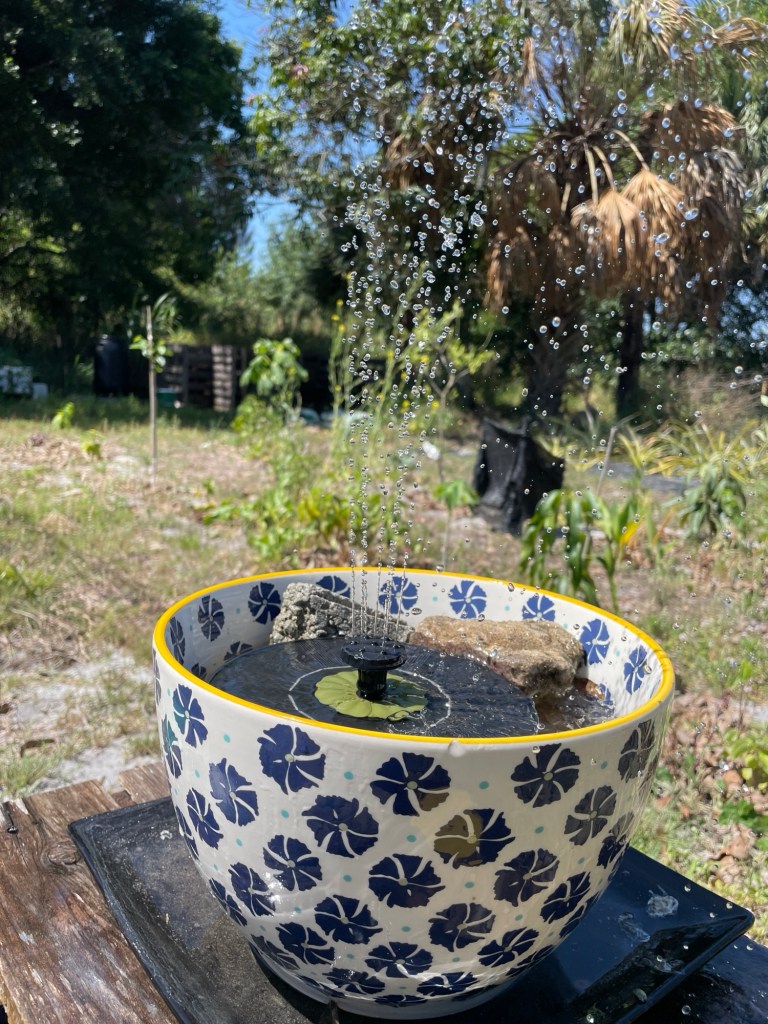
In a matter of minutes, I was able to provide the birds a drinking water source, as well as a place to splash & cool themselves in the Summer heat.
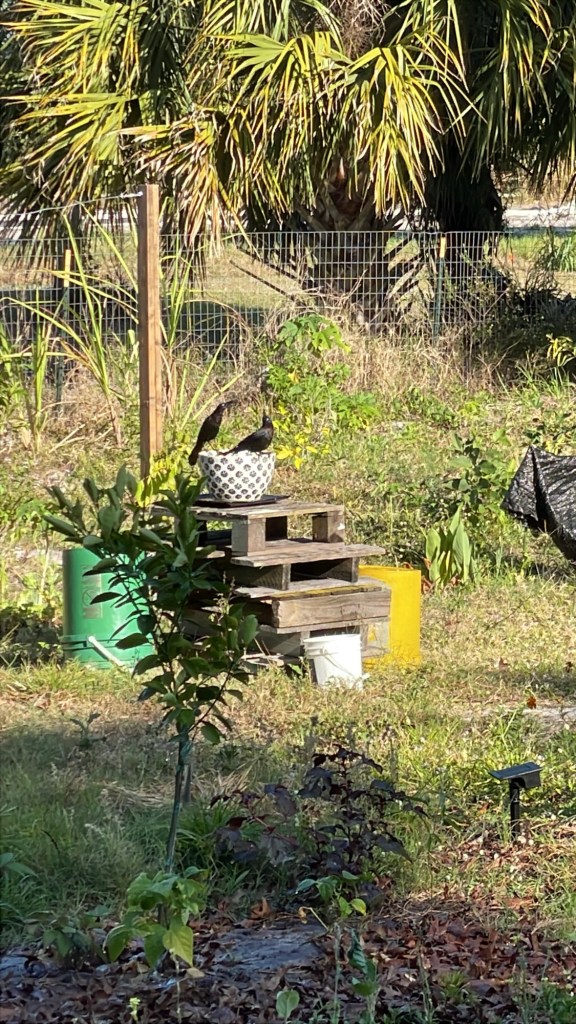
The birds quickly took to the fountain & I knew I was on to something😏
Now I was providing the birds with food (by way of a grasshopper buffet😝) & water. In an effort to be an all-around super host eager for my bird guests to stay awhile, the natural next step is to provide them with a place to live.
This led me down yet another Google rabbit hole🤓, researching Florida birds; with priority to those birds which have mosquitoes as a large component of their diet.
I spent days learning more than I ever thought I would about birds & landed on the Eastern bluebird as my target guest.
I learned that each species of bird has unique nest box/bird house requirements. If I wanted to attract the bluebird to come to Mahaba Farms & stay awhile, I’d have to build a nest box that met its specifications. Thanks to the Internet, that information was easy to find.
One of these days I’ll get around to building these accommodations. Naturally I’ll use scrap materials I’m constantly hoarding— *clears throat*— ahem, I mean “resourcing” at the farm and build 2 bluebird nest boxes.
One thing I know for sure is there is now a constant parade of bird visitors throughout the day &- most importantly- it took only 1 week after the addition of the solar water fountain to notice a sharp decline in the lubber grasshopper population. I’ve seen only a couple on the farm in the last few months & no crops have since been decimated. Hopefully my new bird friends will also feast on the mosquitoes that make working outside pretty miserable in the Summer😫. If not, the birds are still great to have around🤗
The below video shows a couple of Brewer’s black birds (routine farm visitors) in action:
 Mahaba Farms
One response to “If Ever There Was a Time To Spray Chemicals, This Would Have Been It!”
Pretty + practical! Love it👏🏾
LikeLike