
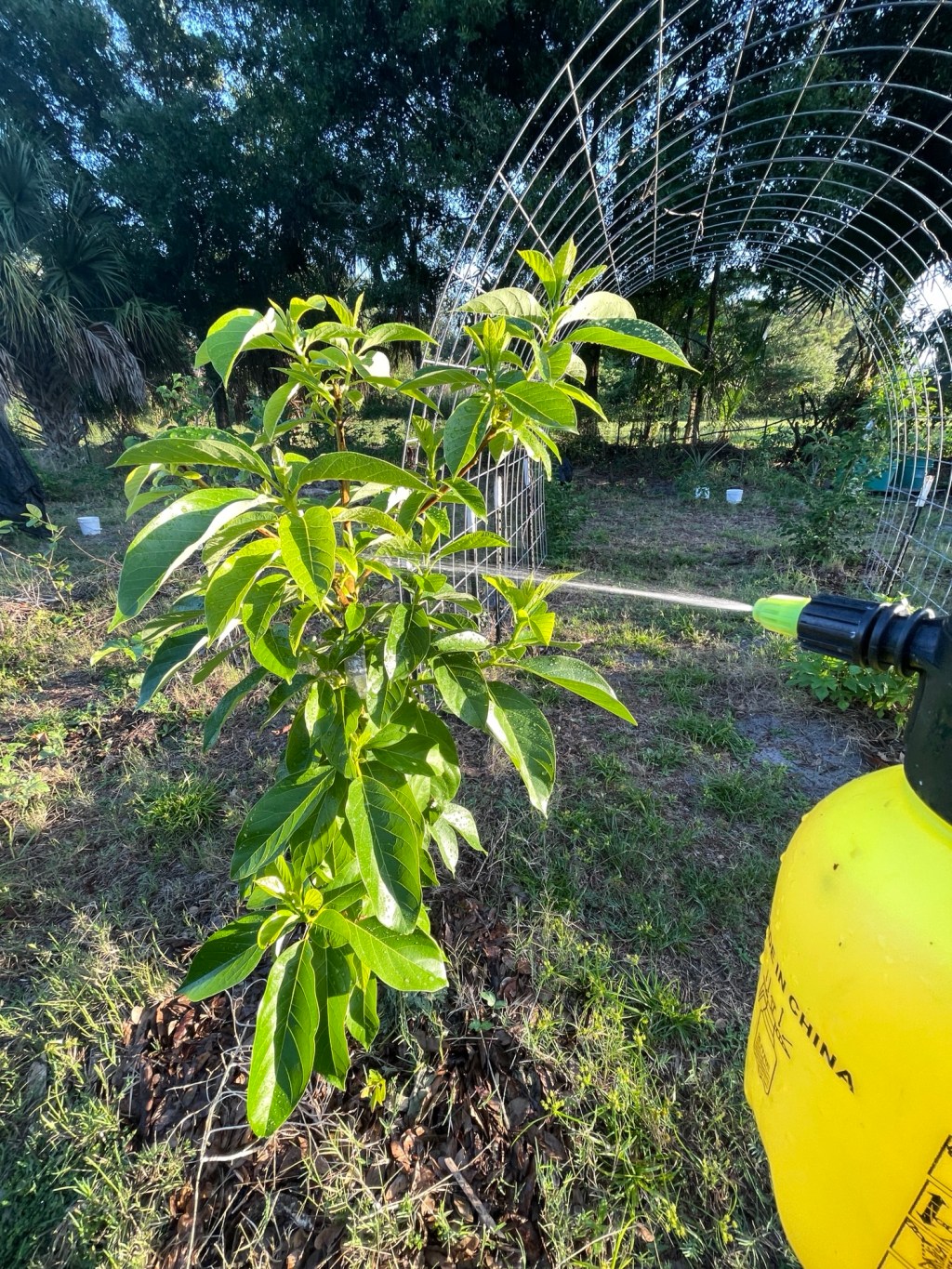
Time is my favorite flavor ingredient. Fermentation is a fun & easy way to explore new flavors.
I spent time in Japan years ago & discovered that the salty mush that passes as commercial miso paste in the US isn’t what miso paste is meant to be. In the last few years, I’ve taken on making my own miso paste. Since I don’t climate-control my home, that means I must make miso like the Japanese artisans— in the Winter.
Beans + salt + koji (rice inoculated with yeast spores) + 6 months of hanging out in my cool pantry to ferment= a complex flavor bomb🤯
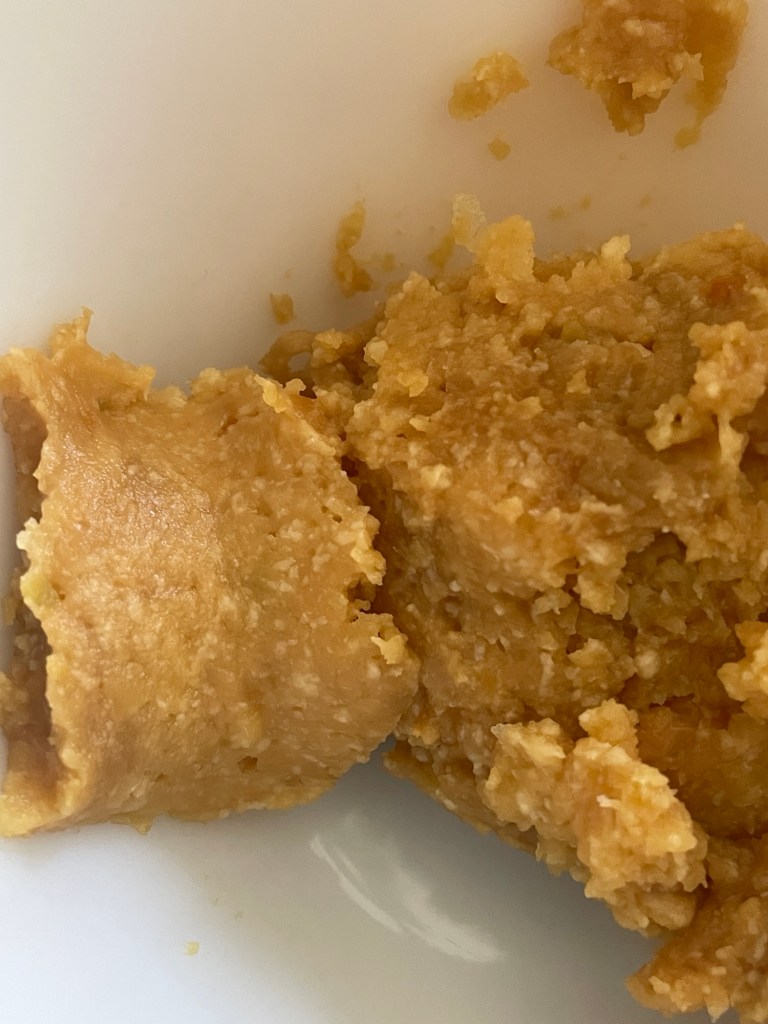
Because soy beans don’t easily grow in my context, I’ve been experimenting with alternative legumes in my miso recipes. This past Winter I tried several new legumes, including pigeon peas grown on the farm. All of the misos turned out great 🤤! I have until next Winter to make use of these misos & determine which I’ll repeat (& need more of😛) for next Winter’s miso making.
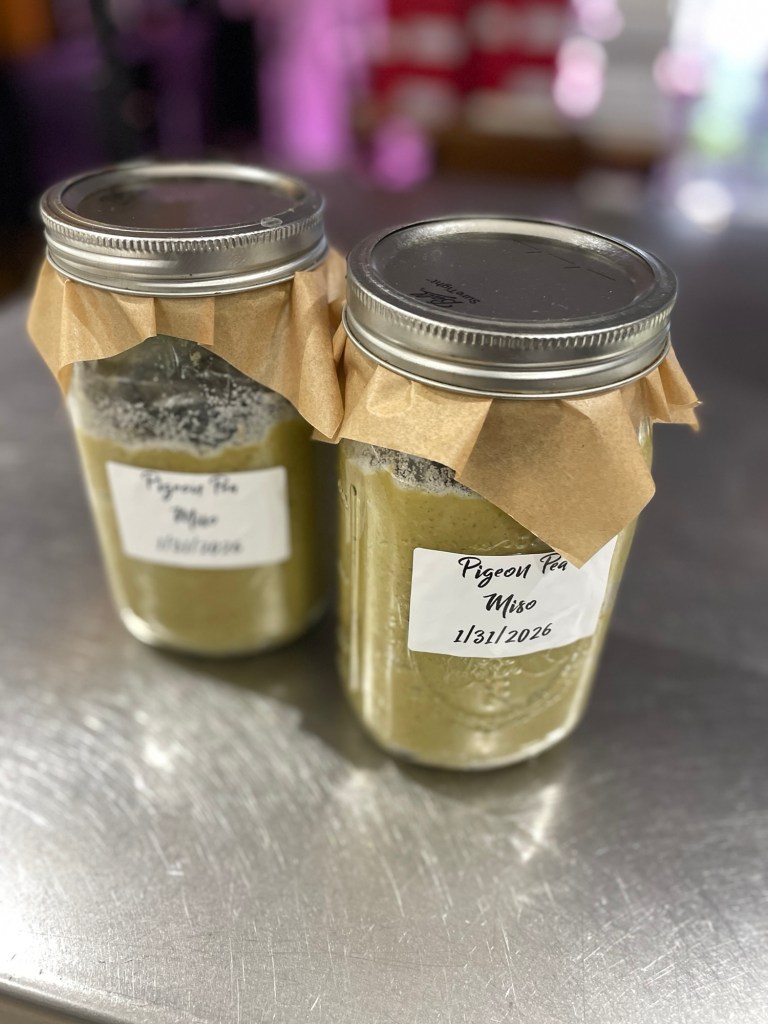
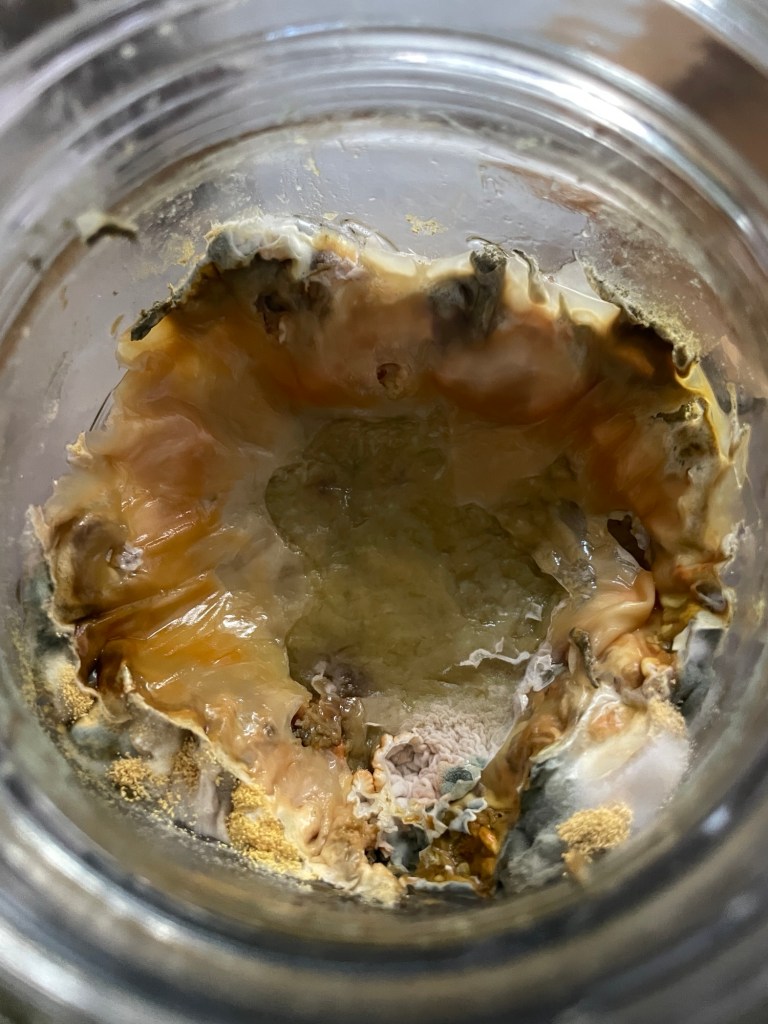
Cracking open the jars of miso in Spring, you’re first met with what I call the miso “skin.” This is the crusty, protective film the yeast & bacteria built atop the yummy finished paste we’re after. Typically this skin is discarded. I peel this skin away & feed it to my composting worms. This year I had a genius idea:
How about before I feed it to the worms, I use the microorganism rich miso skin to make a foliar spray for the farm?
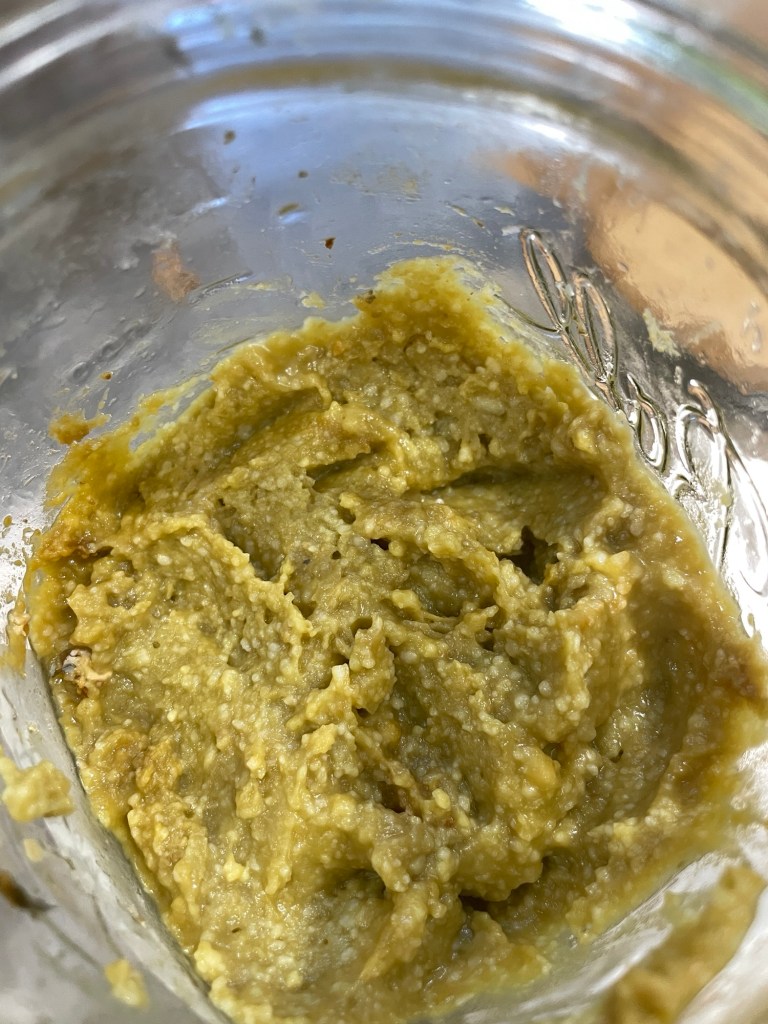
Foliar spray is a liquid that is sprayed on the (foliage) leaves of a plant. Plant leaves have stomata on the surface- much like the pores on human skin- which allows for the rapid absorption of the foliar spray. In my case, creating a foliar spray from the miso skins means my plants would get a dose of beneficial bacteria & yeast; improving their immune system (Did you know plants have immune systems?) & overall health via immediate access to nutrients.
So with my piles of miso skins in hand, I set out to make my beloved plants a foliar spray that would include as much goodness as I could offer.
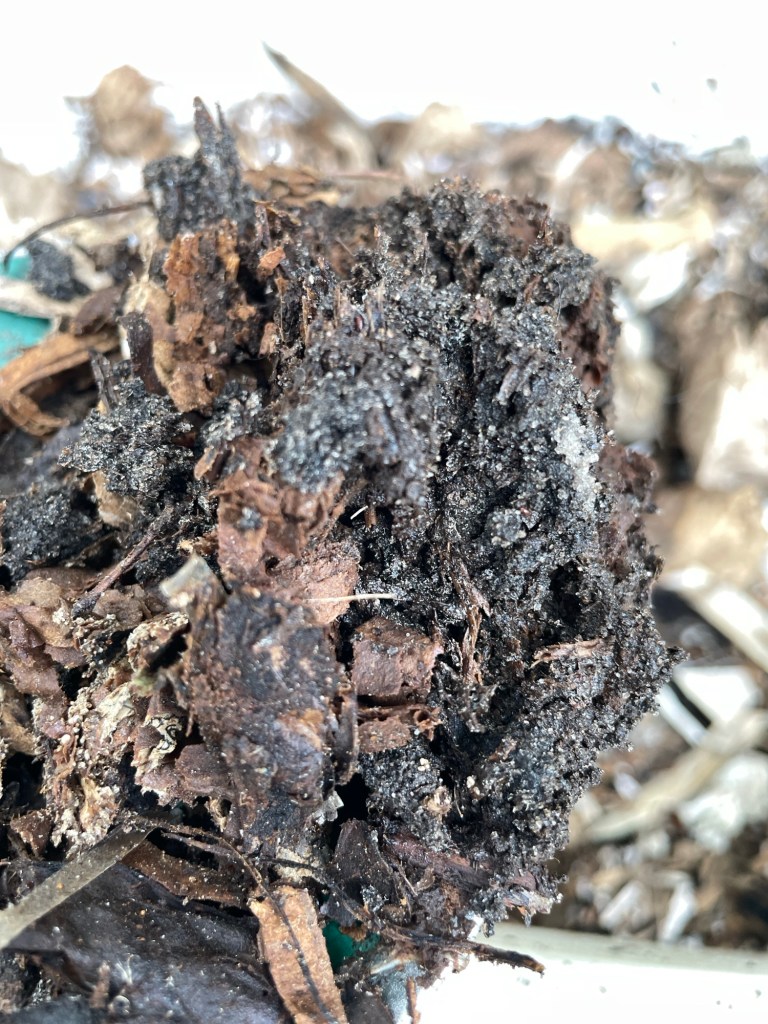
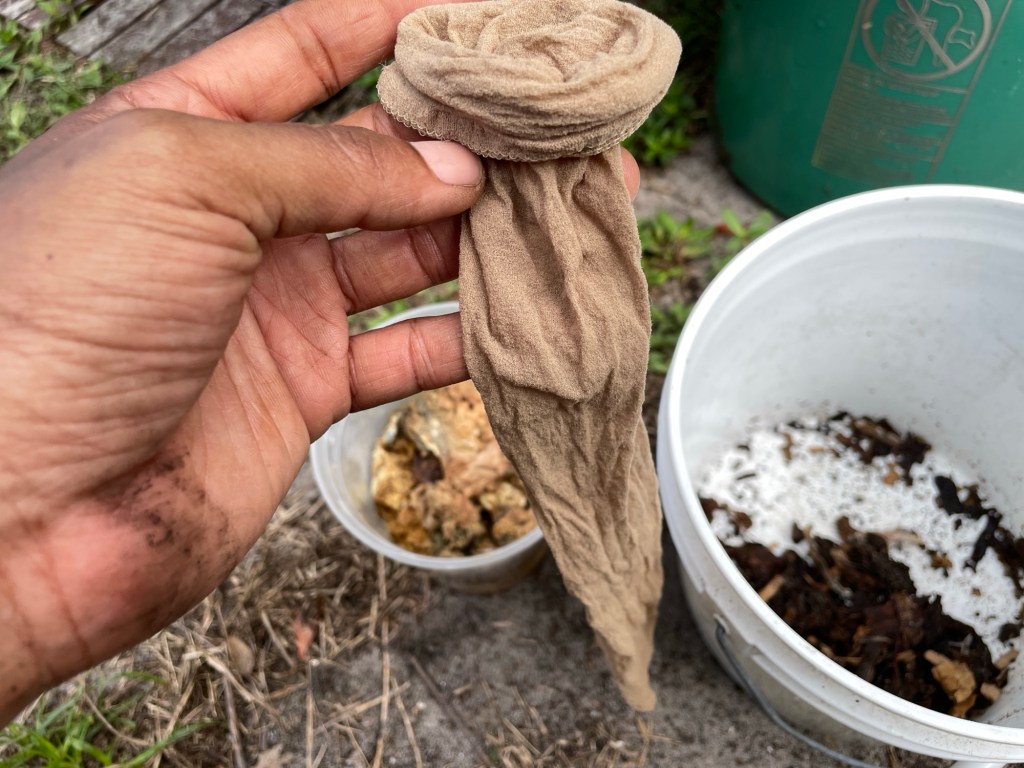
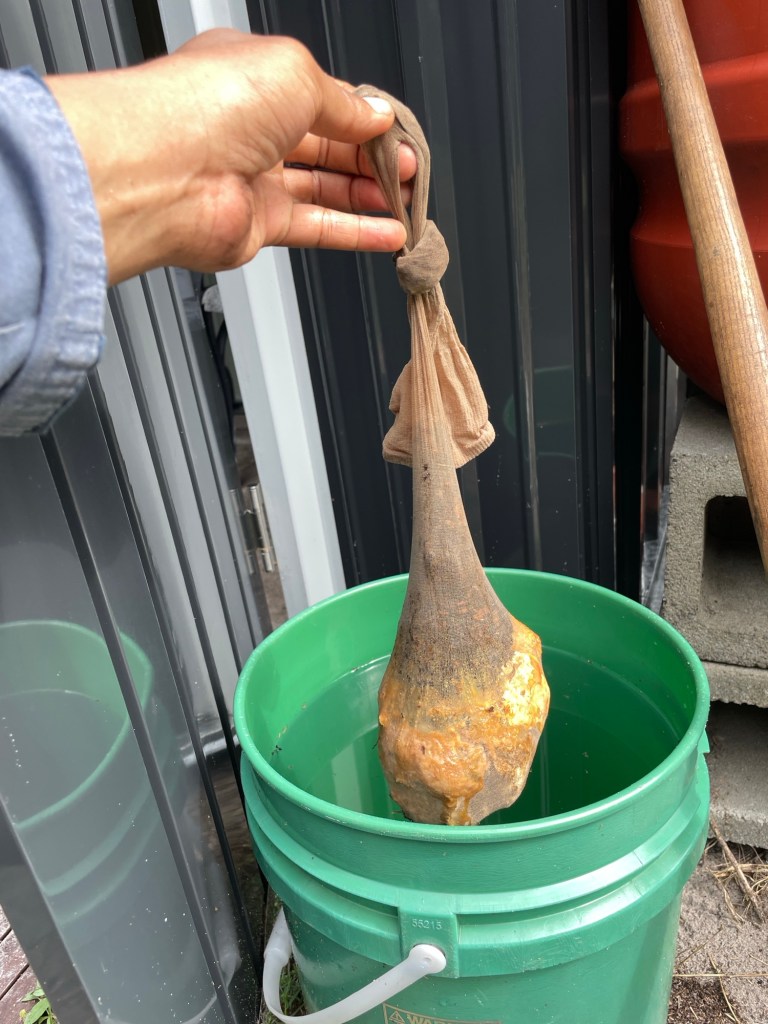
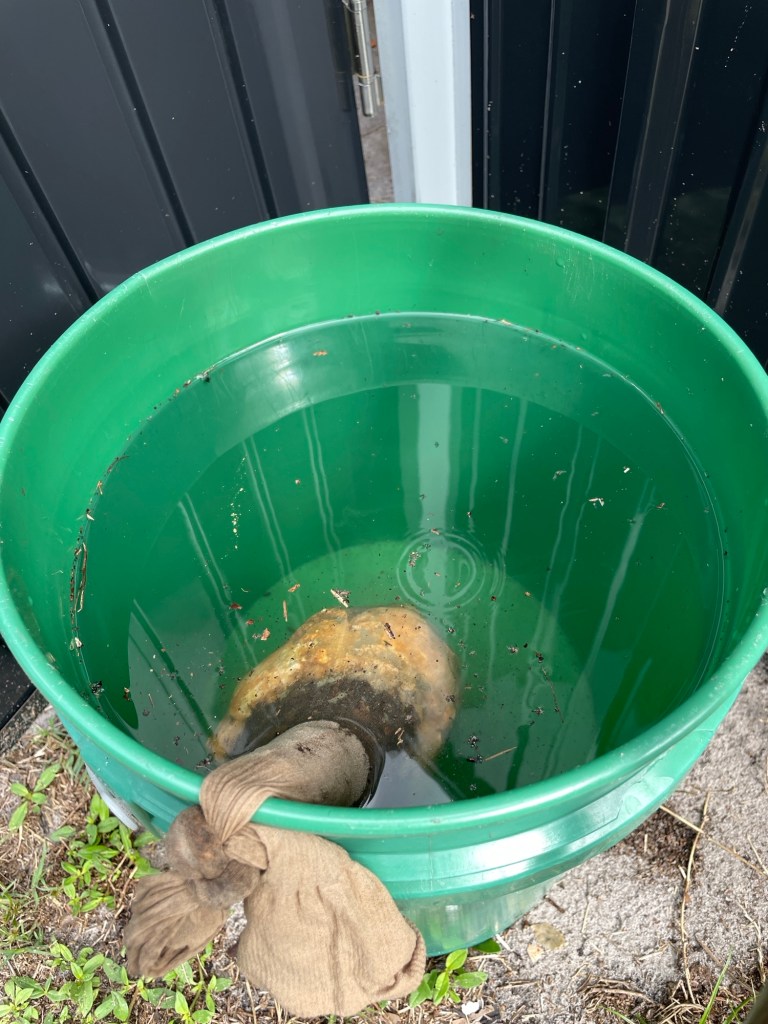
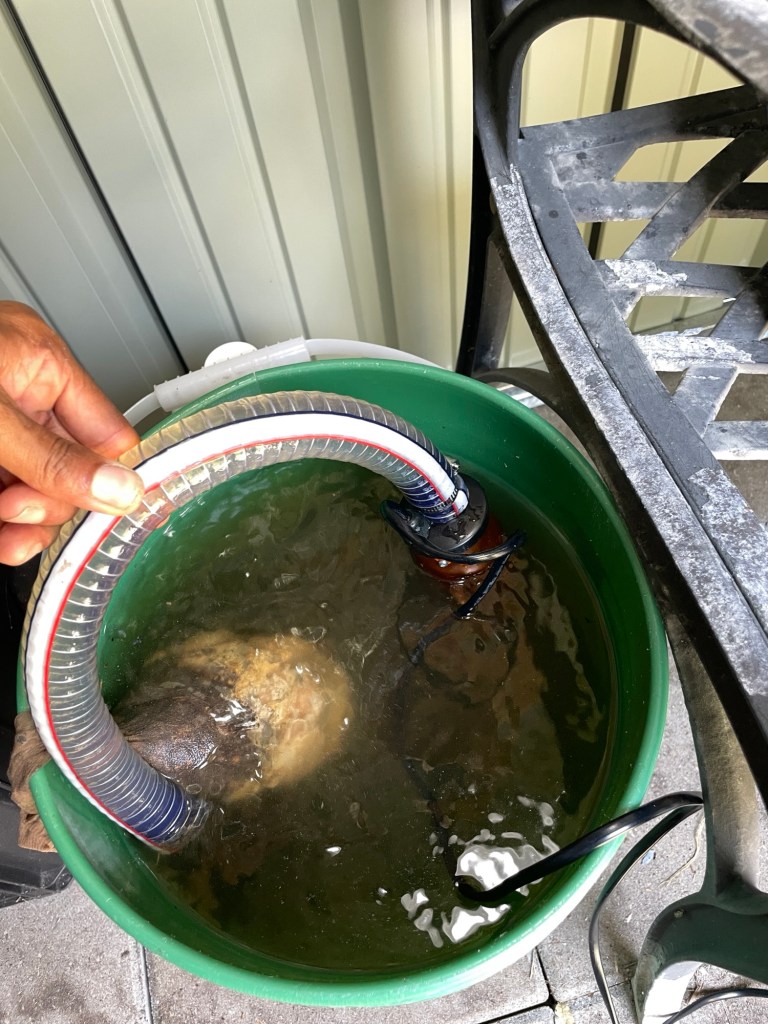
In addition to the miso skins, I added freshly harvested worm castings & Epsom salt to the hosiery sock that would contain my solid organics. I used all repurposed materials that I had on hand to build a pump to aerate my rainwater brew overnight; keeping the solution aerobic.
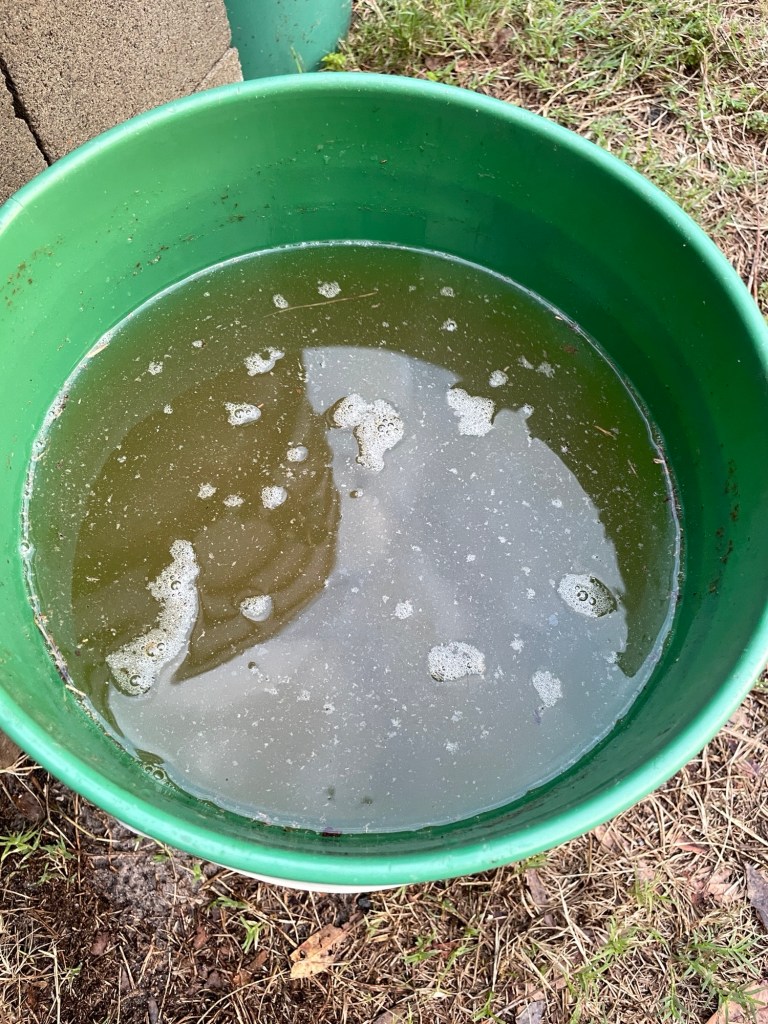
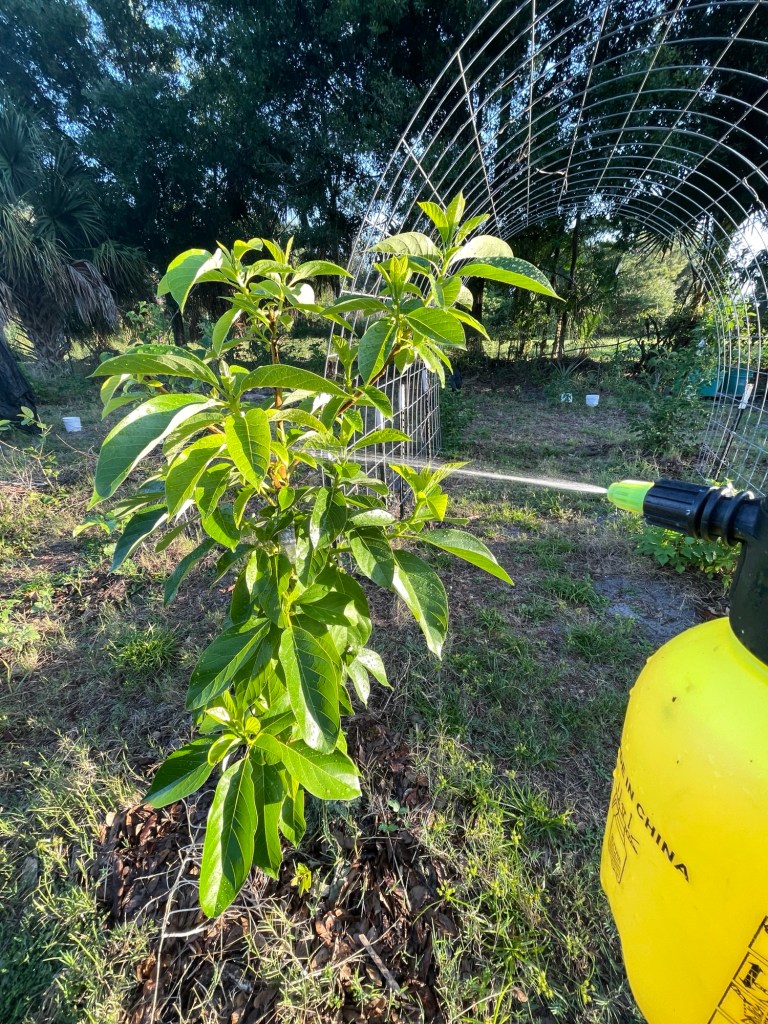
Twelve hours later, what resulted was a glistening, delicious smelling brew✨. I can’t prove unequivocally that the miso skin tea did anything of benefit for my plants, but spraying them felt like a generous offering- one I’m sure to repeat.
 Mahaba Farms
2 responses to “Culinary Waste Becomes Foliar Spray on the Farm”
No doubt your plants appreciated your effort. Great job🤓
LikeLiked by 1 person
They’re sure shining & thriving like they appreciated it🤩
LikeLike